Water-level report—Monthly Report May 2024

May is over—and until the floods at the end of the month, it was almost business as usual. Almost, because in southern Germany it was another month in which there was a public holiday practically every week, which is why (and because of illness) a few events were canceled.

Nevertheless, we again had 16 events with the standard program: from the Sewing Café to RAD-ikal technisch and the OpenStreetMap regulars’ table, two Maker Mondays, two CTF meetings and two open electronics labs with The Things Network/LoRaWAN. Not to forget a meeting of F.U.C.K., a Jugend hackt Lab and four Live Let’s Plays.

As part of the Wikidata competition Coordinate Me, there was also a related meeting for interested parties to assign coordinates to Wikidata objects such as hospitals or government buildings. In addition to the public schedule, internal organizational and working meetings as well as a plenum of local climate protectors took place as usual.

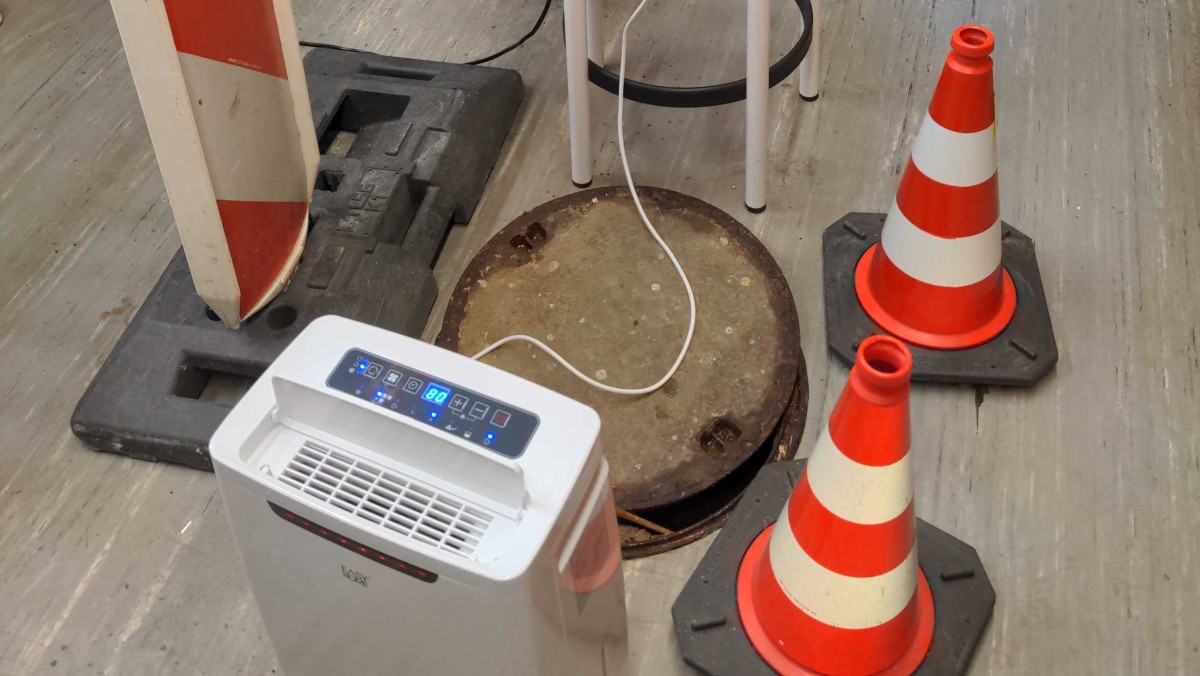
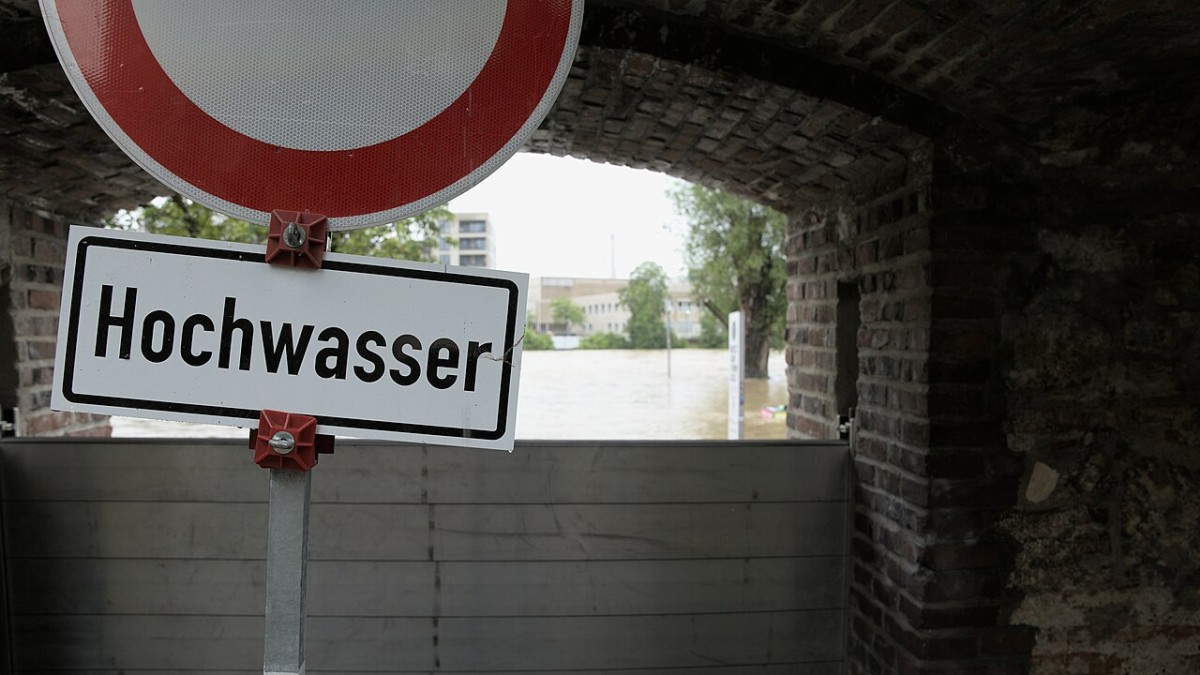
So far, so unspectacular really. Until the last two days of the month, when there were more and more signs that we were threatened not only by persistent heavy rain, but also by flooding—which is why we cleaned the rainwater drains and prepared the house for all eventualities. The result in advance: our feet got wet, but there were no serious consequences. But that will be the content of the June report :)

Not An April Fool's joke—Monthly Report April 2024

April has been over for a few weeks now—we may only be reporting on it now because we first had to catch up and celebrate a milestone we reached in March ;) We count (rather conservatively) the number of visitors at all events and we already broke the 1000-person mark on Maker Monday on March 18. If that wasn’t a reason to celebrate!

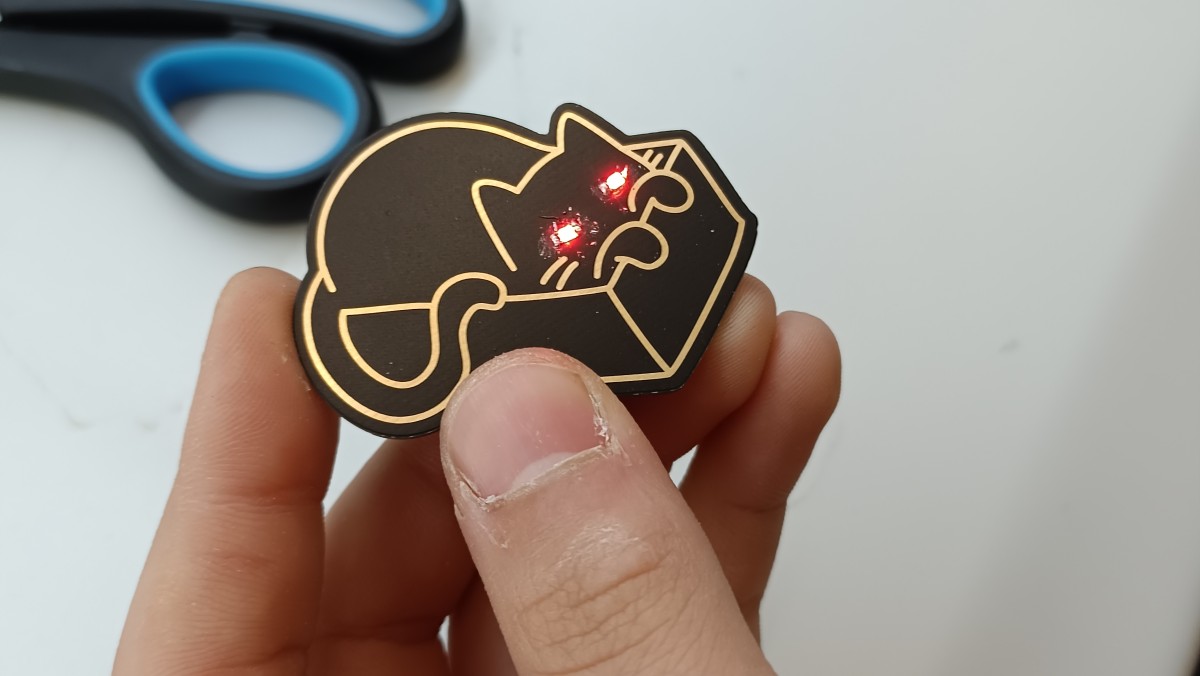
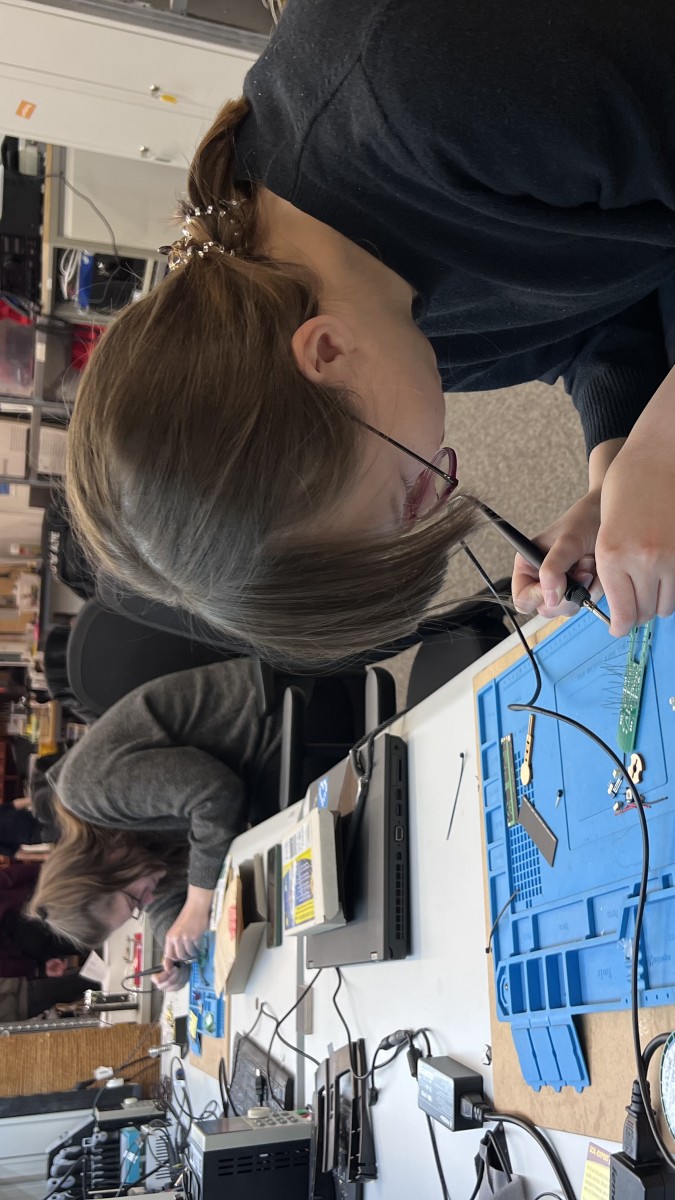
At the first Jugend hackt Lab, flashing and glowing pendants were soldered to get an introduction to working with electronics

Another reason to celebrate is the revival of the Jugend hackt Lab, which is now called Jugend hackt Lab Neu-Ulm. The kick-off event took place on April 27 and we are very pleased to be able to firmly anchor this young talent program in the twin city once again. We would like to take this opportunity to thank the newly found team of volunteers who have revived this program and are now running it!

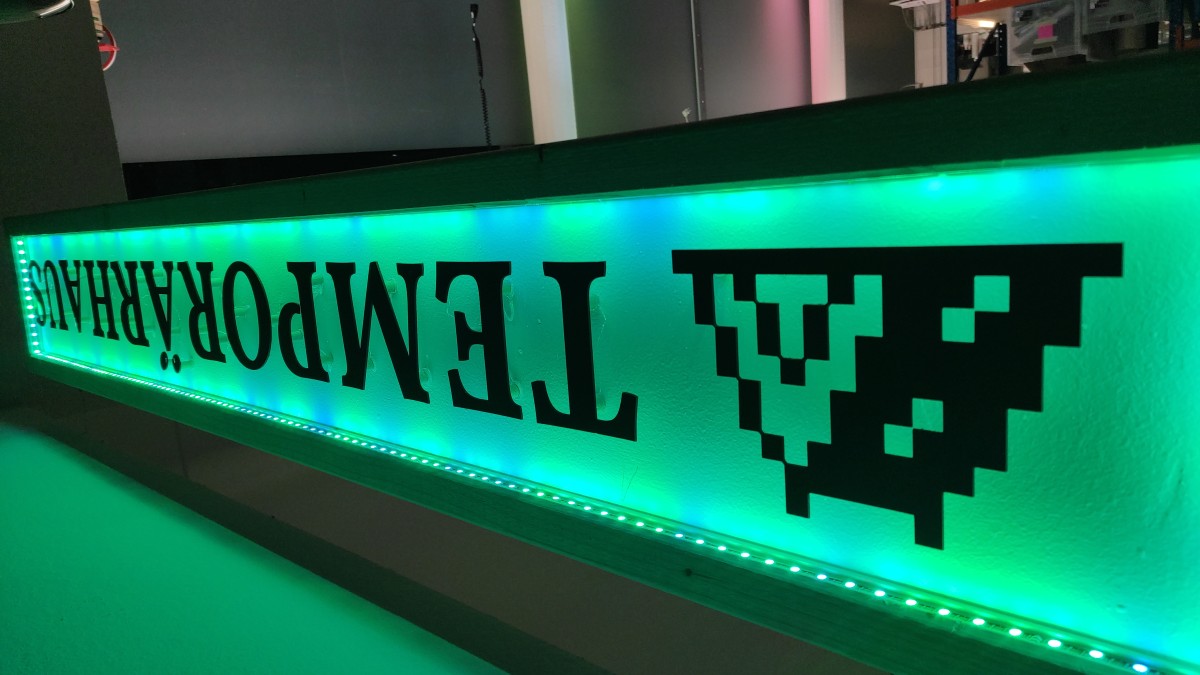
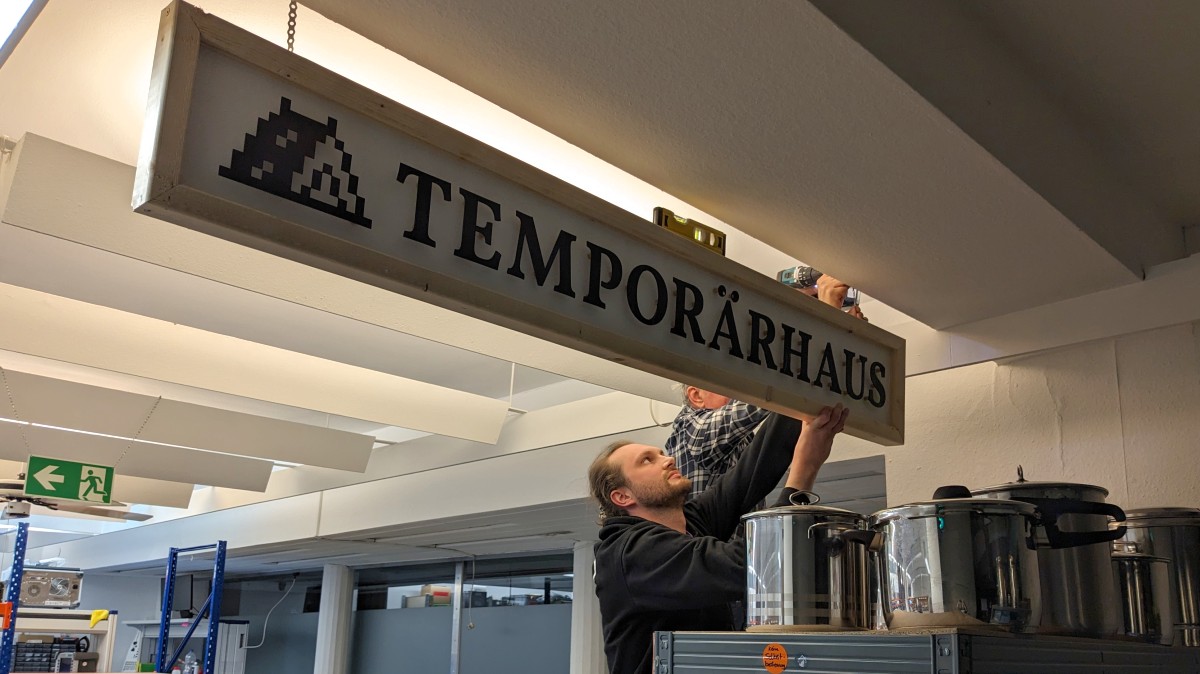
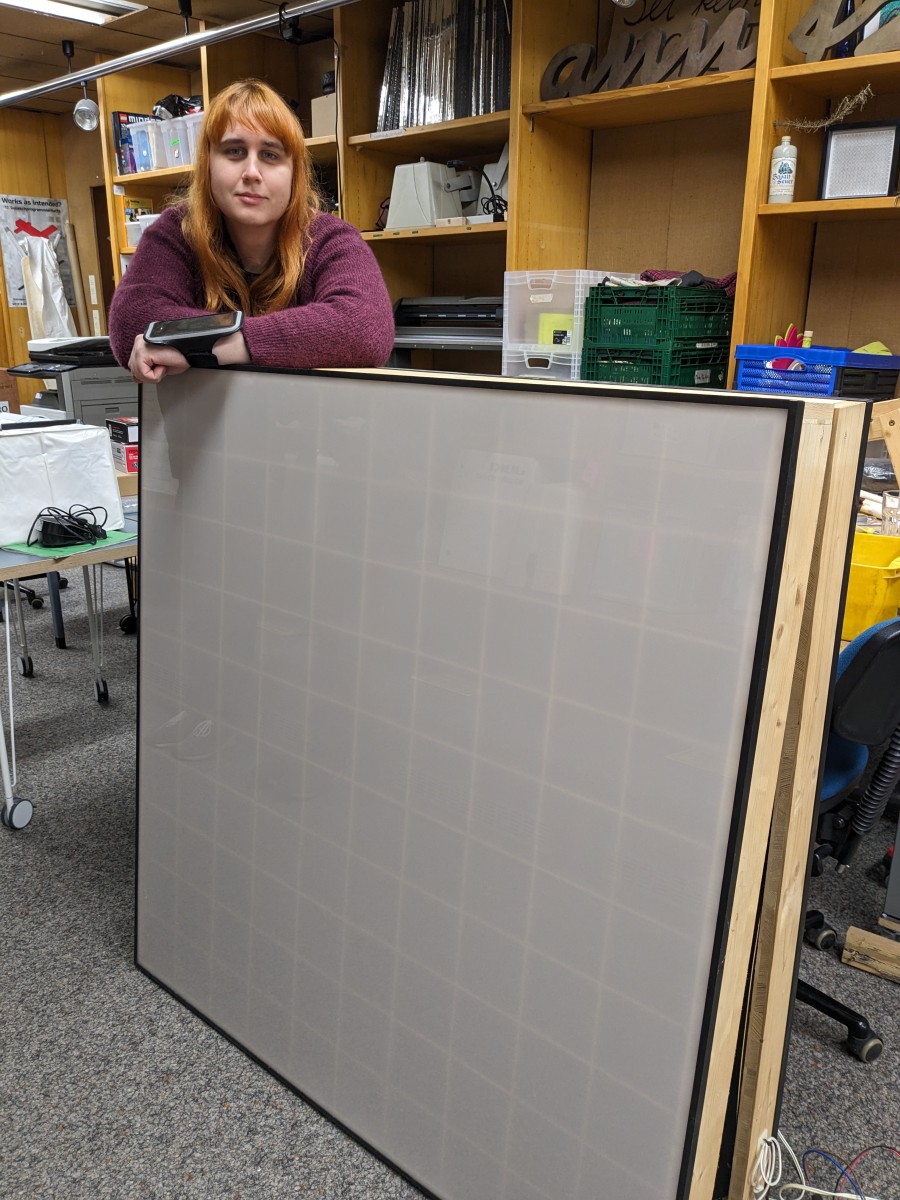
Brand new and self-made: An illuminated sign with our logo

Apart from that, we were back to normal in April with a solid 17 public events. Our machines and equipment were available at the Sewing Café, two open Maker Mondays and two TTN/LoRaWAN evenings with an open electronics lab – accompanied, of course, by a friendly exchange and working on things together. The RAD-ikal technisch continues to focus on interesting technology infrastructure for the mobility transition, the OpenStreetMap-Stammtisch was about free knowledge, the F.U.C.K. group met twice (increasingly with guests from far and wide), three Live Let’s Plays were about computer game culture and twice the CTF/PPP group invited people to playfully deal with IT security topics. A Küche für Alle was also held for the second time.

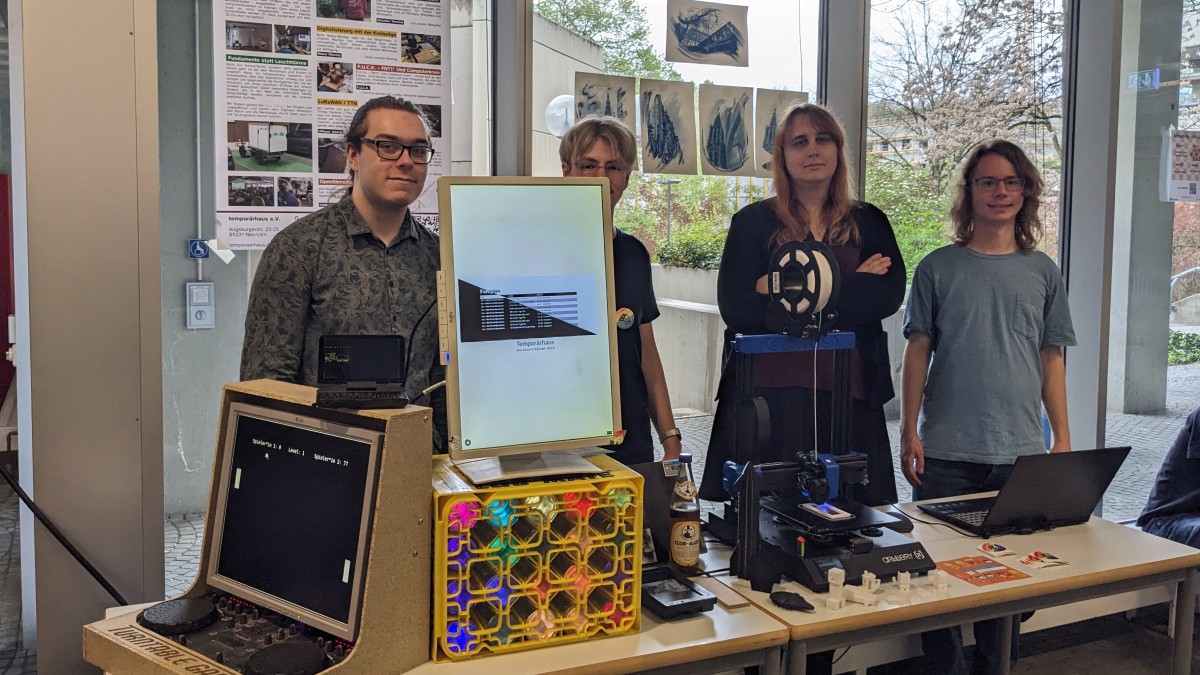
Almost 15 years ago, everything started at the University of Ulm, ultimately leading to our house – and we are still in contact today

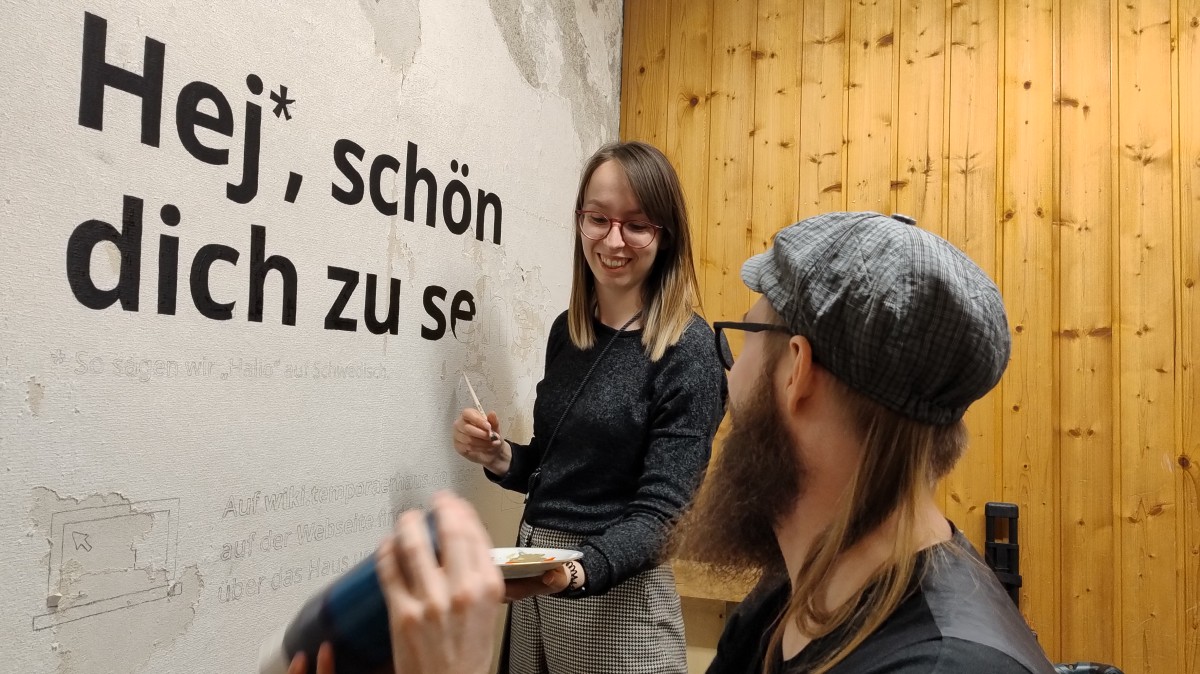
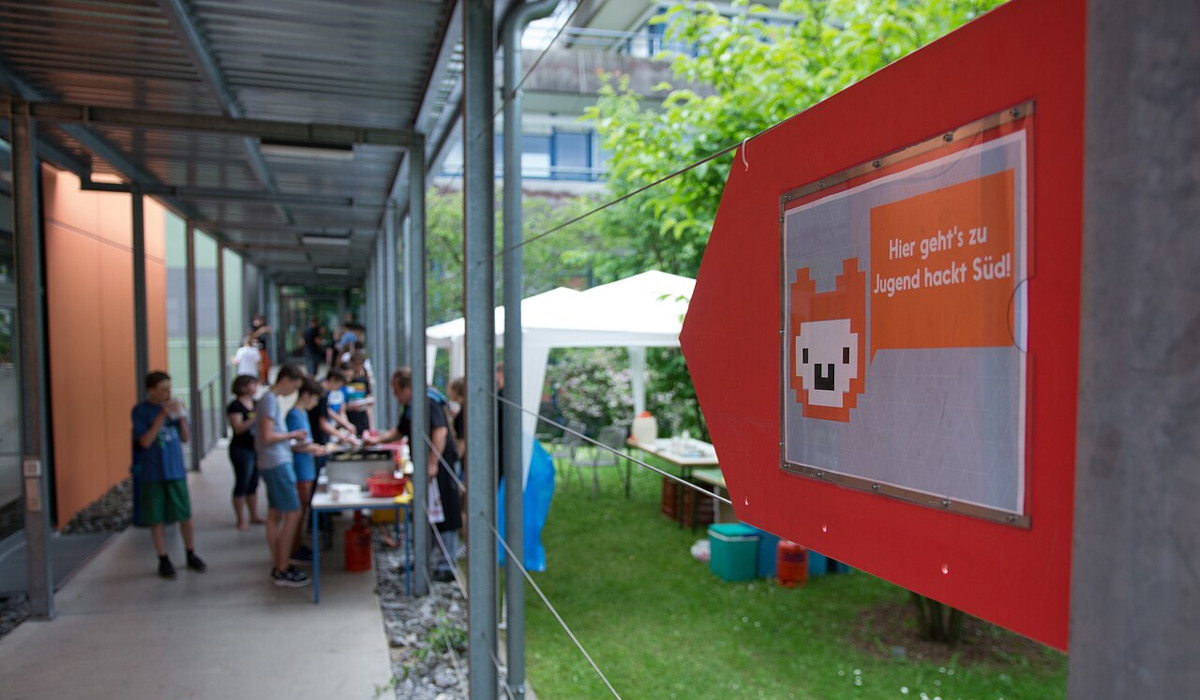
As always, there was also a lot going on outside of these public events. One group took care of a wall painting as a welcome message at the back entrance, which you can see in the cover picture. We are still busy with a lot of small expansion work on the lighting and home automation. And of course it was once again a point of honor to present our house to the new students at the start of the university semester—after all, we emerged from the student datalove group and still maintain contact with Ulm University today.

The Jugend hackt Lab starts again—now in Neu-Ulm

From Saturday, April 27 at 2 p.m., there will be another Jugend hackt Lab in the twin city—now on the other side of the Danube. The first workshop is all about learning to solder, as this is the basis for many hardware projects. And by the way, you’ll have built something nice in the end!

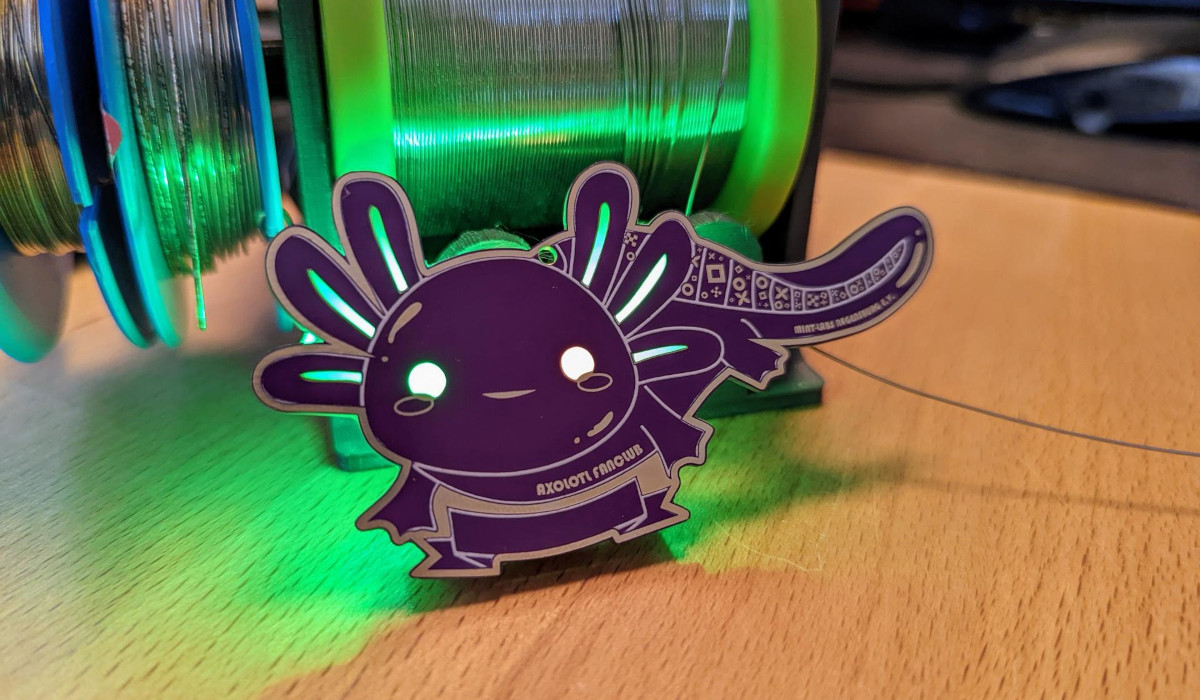
Anyone between the ages of 12 and 18 can take part and choose a soldering kit, assemble it and take it home with them. From an axolotl to a space girl pendant to a “Jugend hackt” alpaca and beyond, we have a whole collection of different kits to choose from. Beginners who want to learn how to solder for the first time are just as welcome as advanced users. Participation is free of charge, but a registration email to jhlab ‘at’ temporaerhaus.de will help us a lot with the planning!

Youth work is practically in our DNA: there were already many overlaps with STEM youth work in the student open data group at the University of Ulm. In 2015, we brought the youth development program Jugend hackt, which had started two years earlier, to the south with a weekend event at the University of Ulm and that’s where the idea for a hacker and makerspace in the city that is self-determined and managed by the community was born.

Flashback: This was the first Jugend hackt in southern Germany: 2015 at the University of Ulm

In addition to the weekend events held from 2015 to 2019, we have always been keen to offer youth programs throughout the year. The Jugend hackt program found an answer to this with the Jugend hackt Labs, which started in 2019—and we were very pleased that our community, alongside Fürstenberg an der Havel became the host of one of the first two nationwide labs, which was followed by 18 other locations over the years.

We are therefore even more pleased that after the premature end of our activities in Ulm and a year-and-a-half-long forced break, the Jugend hackt Lab in Neu-Ulm will return starting 27 April 2024. Last year, a group of volunteer mentors formed, who would like to continue this valuable and multiple award-winning program in the SpoSo rooms.

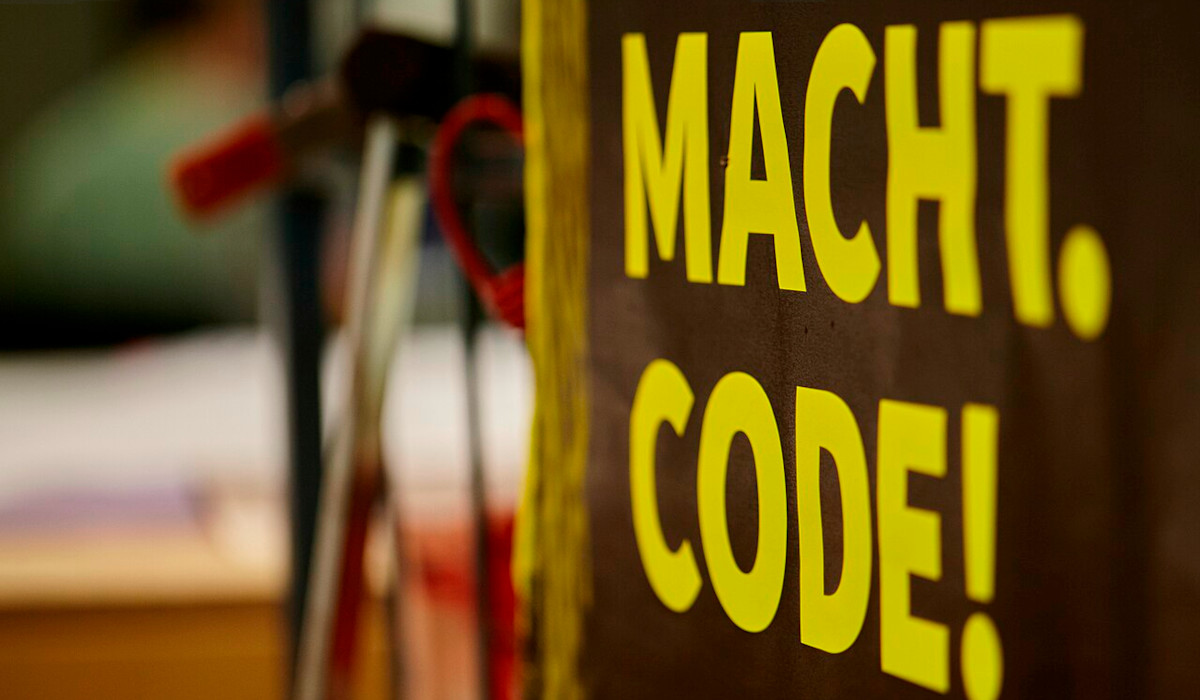
The motto for 2019 was MACHT. CODE. and this is meant quite seriously: Those who create realities with code exercise power. We want to help young people question this power.

In future, the Jugend hackt Lab will be held once a month, alternating with open meetings and workshops on different topics. It’s not just about technology and learning to program: we see technology as a means of societal change and would like to invite young people not just to consume, but to use these tools to actively participate in their own environment and explore the political dimensions of free software, free hardware, open data and transparency.

Photos: Axolotl Fanclub Badge, CC BY-SA 4.0 blinkyparts.com; Lunch outside at the first Jugend hackt in Ulm, CC BY 3.0 Eva-Maria Kühling/Peter Wozniak; Jugend hackt in Ulm 2019, CC BY 4.0 Holger Dorn (Jugend hackt)

Here's to summertime – Monthly Review March 2024

Sun! Rain! Sahara dust! Capricious weather! But at least it’s summertime! March brought us all of this, in addition to a total of 19 public events at the temporärhaus. This month, we would like to highlight the lecture on The Human Cost of AI, the workshop evening Wikidata loves Basketball and the three-day LokaliCon meeting of the local community rooms of Wikipedians from nearly all over Germany (which only counts once for the statistics despite the three days). In addition, a Kitchen for All took place for the first time as part of the Climate Alliance, which is also supported by Haus der Nachhaltigkeit.

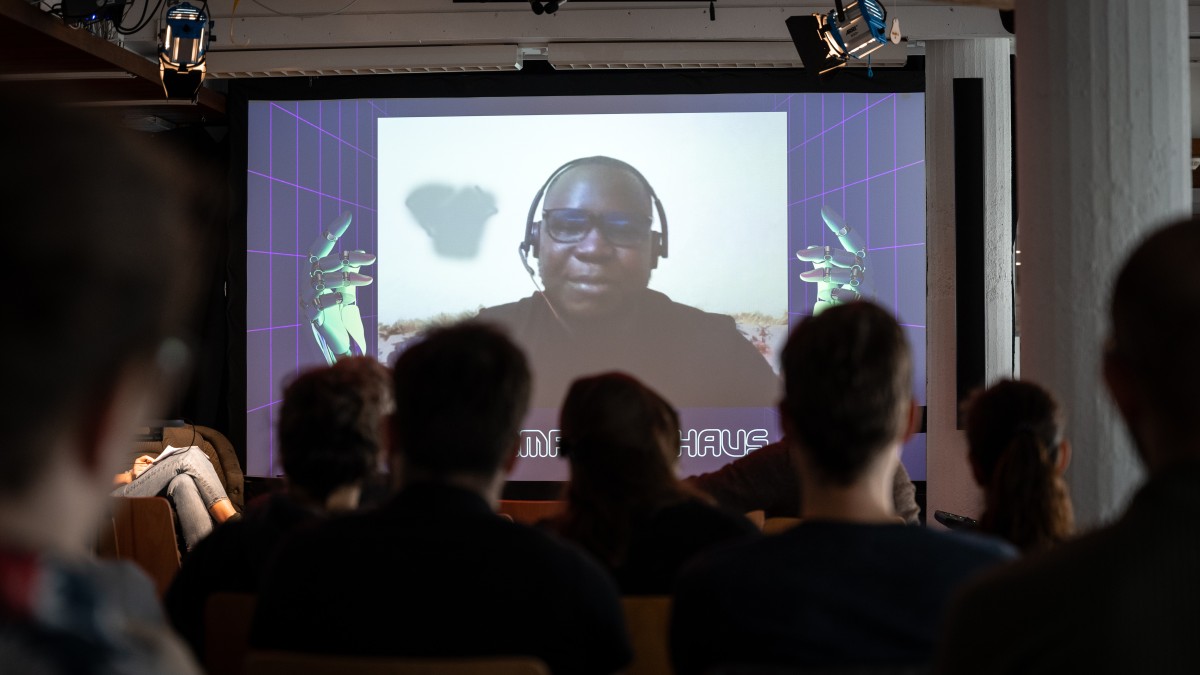
View of the stage, on which Mophat Okinyi is connected remotely and reporting. The audience in the foreground.

As the input on the human costs of the current AI hype fitted in so perfectly with the Ulmer Denkanstößen, which started a week later, we were able to get Prof. Rebekka Hufendiek to moderate the event. Mophat Okinyi impressively explained the working conditions of Clickworkers in his home country of Kenya, for example, who not only make the training of “AI” possible in the first place, but also have to fight their way through hate and violence on the social networks of the relevant tech companies every day as the first moderation instance. Thanks to the CCC Ulm and Guido Sondern for arranging and collaborating on this programming!

As usual, there were also 15 regular events, from the OpenStreetMap-Stammtisch to the Nähcafé, RAD-ikal technisch, four Live Let’s Plays and two editions each of F.U.C.K., Maker Monday, CTF/PPP and the TTN/LoRaWAN evening, which, as reported, is now also an open evening for all things related to the electronics lab.

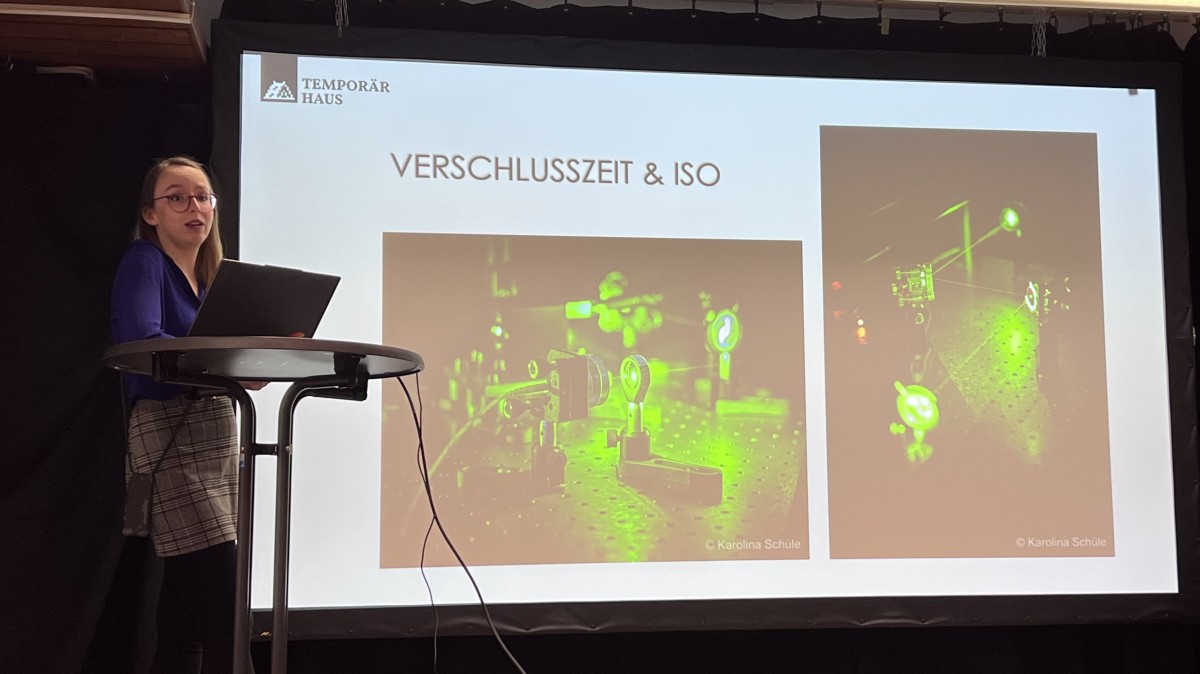
Karo is on stage and explains the relationship between shutter speed and ASA/ISO in photography.

One of the F.U.C.K. meetings was about photography and how ASA/ISO, aperture and shutter speed interact. Almost trivial for Karo, who usually works on quantum optics during the day. Meanwhile, we also played with photography in general to upload images of objects under a free license on Wikimedia Commons. And as described, we would like to use our photocopter to be able to make aerial shots available to the world as Free Knowledge.

House construction work, house cleaning weekend, the woodworking workshop and the new atelier

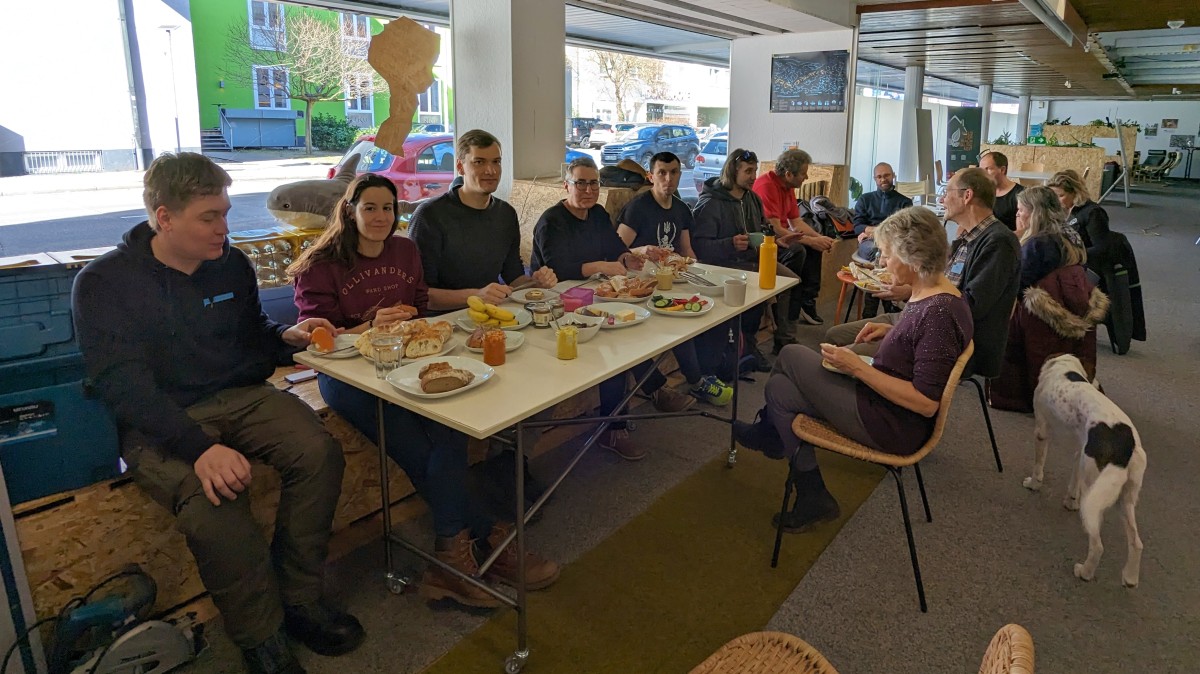
After the tidying and cleaning work is done, 13 of the weekend’s active participants sit down to eat together.

In the monthly reports, we traditionally only include events that are aimed at the general public or groups from within the digital volunteering community. As has been the case since the beginning of community work at the Weinhof and also since the reopening in Neu-Ulm, these public events are always complemented by at least as many unofficial, internal and purely voluntary work meetings – if not more. Practically everything about the infrastructure, from the fast Wi-Fi to the access system to the drinks vending machines, depends on voluntary commitment—and that requires regular work assignments, which are of course more fun together than alone.

In March, this included a spring cleaning weekend at the beginning of the month, where we tidied up and reorganized our shared spaces together with the active members of the House of Sustainability, plus cleaning windows, floors and other areas. Among other things, we reorganized the electronics lab, dusted, cleaned windows and, last but not least, had brunch together.

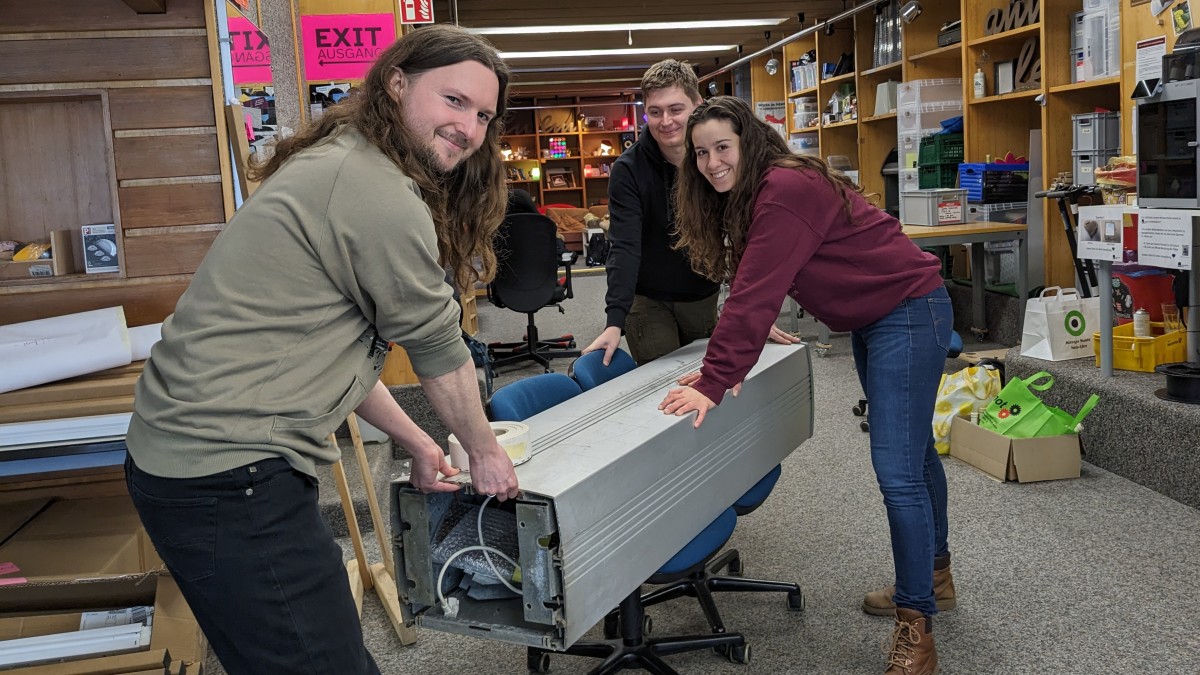
Felix, Max and Jana move a parking ticket machine around the house on two office chairs

We have moved things and equipment to new locations and, above all, tidied up the workshop. Due to a reorganization of the space together with the HdN, we can now set up an atelier space for embroidery, sewing, screen printing, lino printing, cyanotyping and all sorts of other artistic things directly on the other side of the electronics workshop \o/

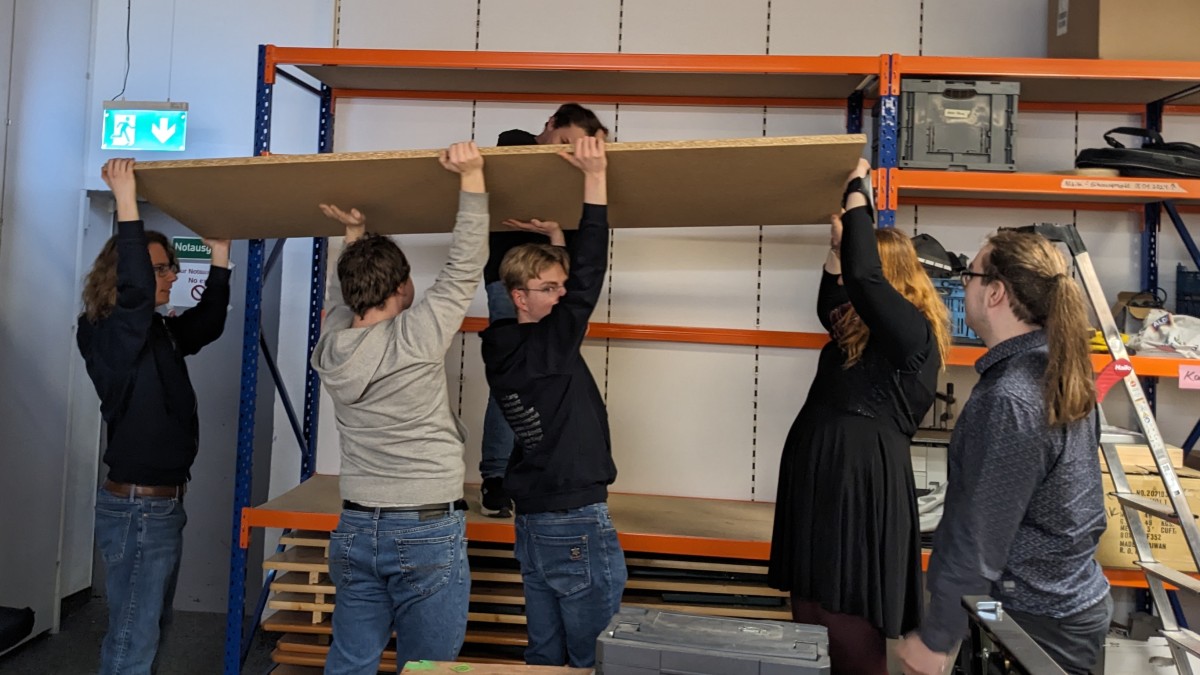
We have dismantled one bay of the heavy-duty shelving in the wood workshop and procured the necessary shelving stands from Verein funds to create a two-bay heavy-duty shelving unit in the studio area to store all the art supplies. Everything we need for all our artistic activities is now stored there.

One of the shelving units in the workshop is being dismantled so that it can be brought into the atelier space.

However, tidying up the workshop was not just about furnishing the atelier space. On the one hand, we moved one of the workbenches into the atelier so that people can work there in future. And the space freed up by the removal of the shelving is now being used as a place for another mobile workbench.

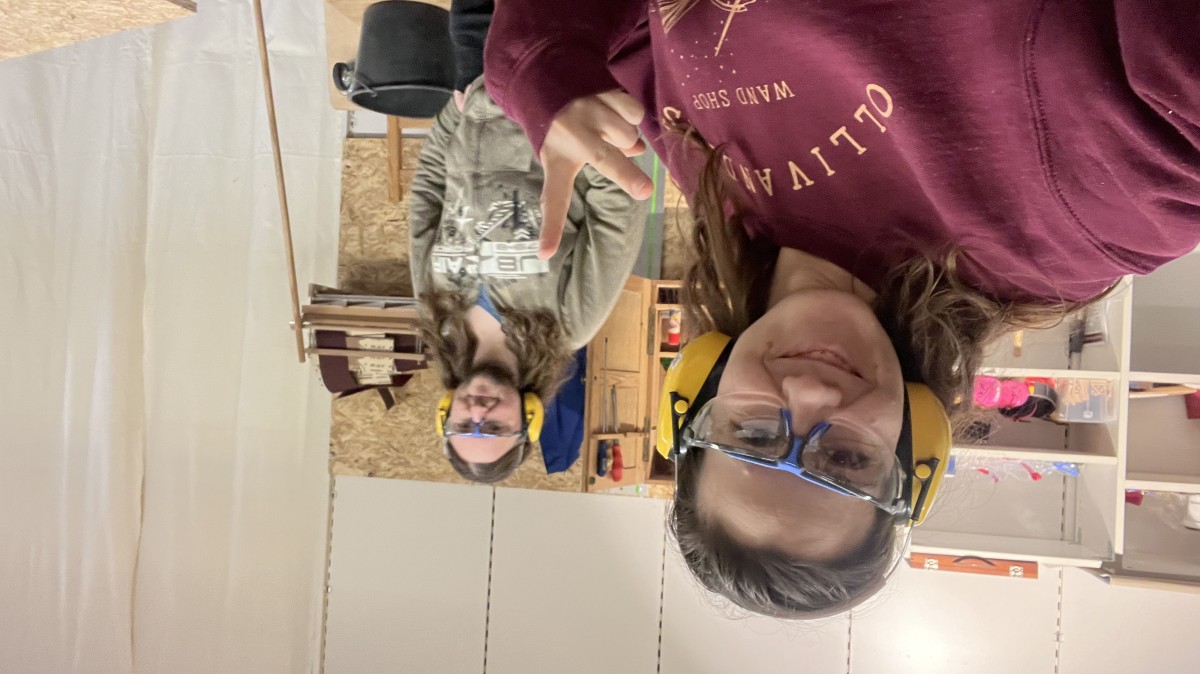
On the other hand, we now have space in the middle of the wood workshop for the other woodworking tools procured from the DSEE funding, which are now in place. In over seven years, we have been able to gain a lot of experience with running an open workshop—what do people want to build here, what equipment do they need and, above all, what equipment can you use to get good results even if you don’t work with it professionally every day? We don’t want to give too much away here and would rather describe it in detail in a separate post. But if you come to the Maker Mondays, you can already admire the machines - and work with them after running through an introduction workshop!

What’s next

March is followed by April—and on the one hand, a regular new program item from the volunteer work for the general public will be launched, which we will report on soon.

On the other hand, we are not the only ones who run our shared house, which is why we would like to explicitly refer you to the monthly program of our house-sharing partners at Haus der Nachhaltigkeit. The photo exhibition is still running in April and is accessible during general opening hours (see both our calendars). And the April program of the HdN includes gems such as a workshop against right-wing and discriminatory slogans by the VVN Ulm and the FCLR Ulm on 15.4. as well as the opening of the lending bar on 18.4., where you will be able to borrow practical items from a library of things.

Es lohnt sich also, beide Terminkalender im Auge zu behalten. Und wir würden uns freuen, euch bei uns begrüßen zu können – egal ob bei Angeboten des HdN oder bei uns und egal ob ihr zum ersten Mal da seid oder ob ihr wiederkommt!

So it’s worth keeping an eye on both calendars. And we’d be delighted to welcome you—whether you’re here for the first time or coming back!

Free photos from up above – we now have a photo drone

This post is part of a series in which we want to present some of our new and valuable material that we were able to procure due to a grant by Deutsche Stiftung für Engagement und Ehrenamt.

Update: There now exists Drohnenfotografie temporärhaus as a category at Wikimedia Commons. All the pictures and videos we take will end up there, sorted by year.

Through our close connection to Wikimedia Deutschland and the many Free Knowledge projects such as Wikipedia, Wikimedia Commons, Wikidata and so on, we have always been very happy to contribute to Free Knowledge. For example, we have collected historical images of Ulm streetcars from the public and made them available to the general public under a Free License by using the Scanner Station of the Stuttgart Wikipedia Community.

But what we’ve always been missing a bit, also because other local spaces take such wonderful photos with them, is a drone with a good camera.

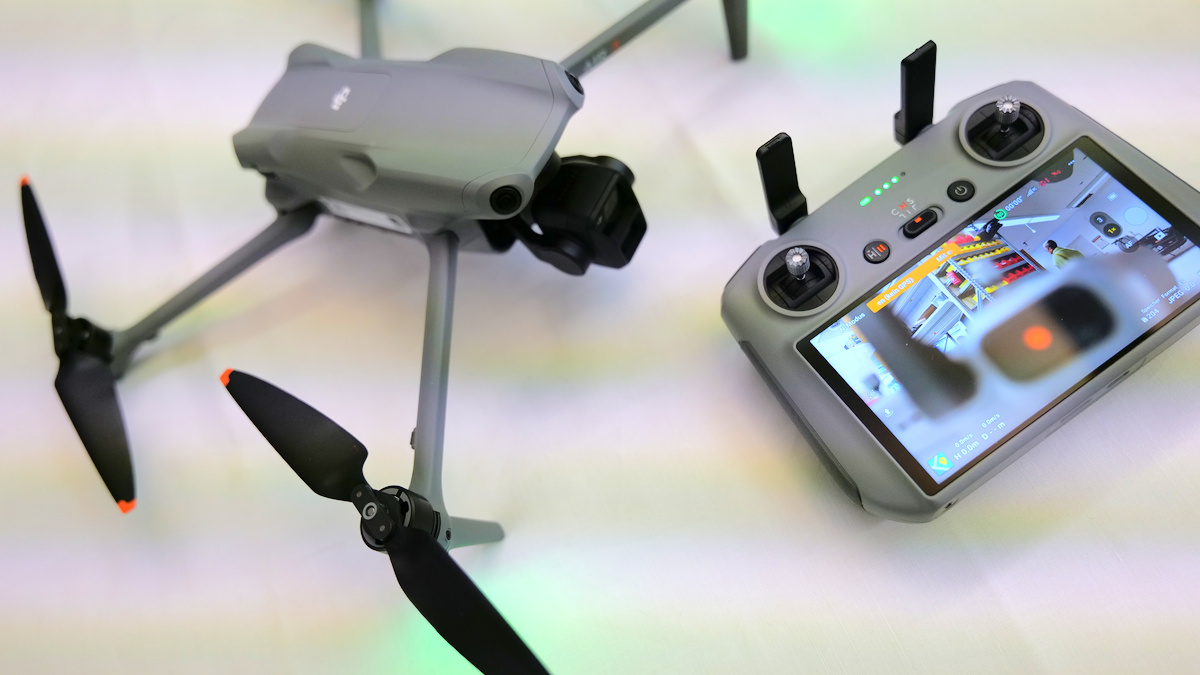
The copter with it’s remote control

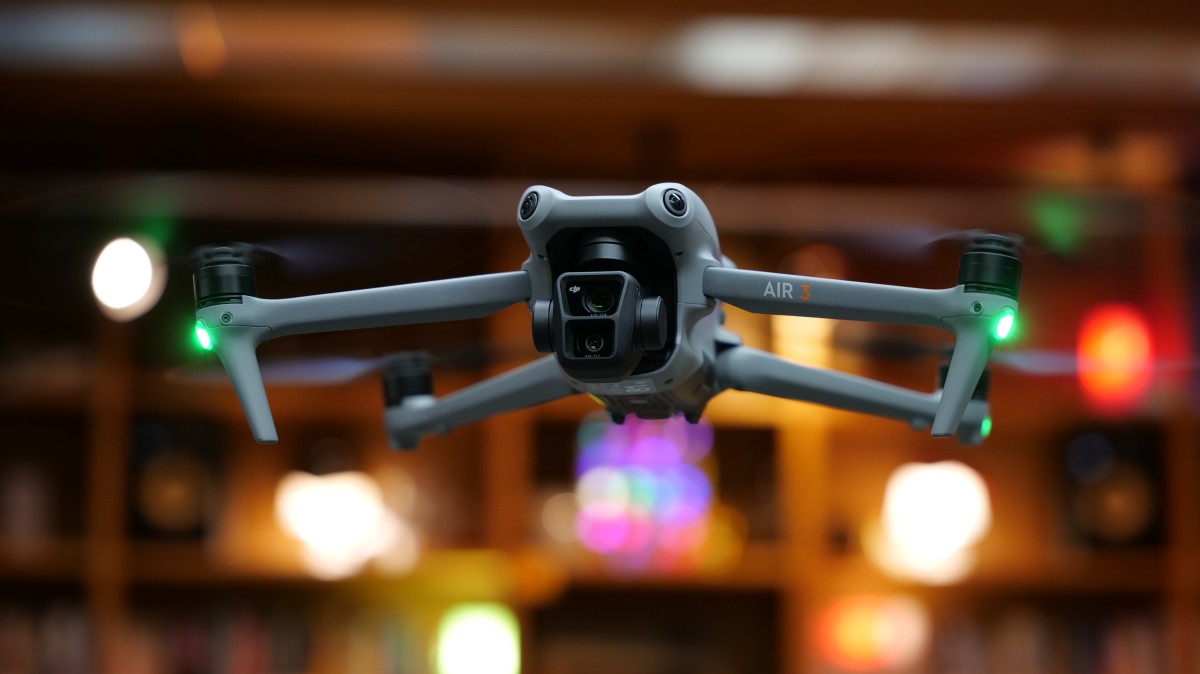
Thanks to funding from DSEE, we have now been able to purchase a DJI Air 3 drone. And that opens up a whole range of possible uses, e.g. great aerial photos of historical buildings, natural monuments and other interesting objects in the region. And, of course, all of this will then be uploaded to Wikimedia Commons, where it will be freely available to everyone. Perhaps we will soon be able to make submissions for the Wiki loves Monuments or Wiki loves Earth competitions.

After a few years of transition, the current EU regulation. has been mandatory for all drone models since 01.01.2024. Our drone is in open category A1, UAS class C1, which means that you can fly it with a corresponding license near (but not over) people and close to buildings. Therefore it is very suitable for our purpose. We also have a realistic flight time of approx. 30-35 minutes per battery, which allows relaxed flying and alignment for the photo – and we bought three of these batteries. The operator of the drone (not the pilot!) is temporärhaus e.V., which means that the necessary liability insurance for our members is covered by the association.

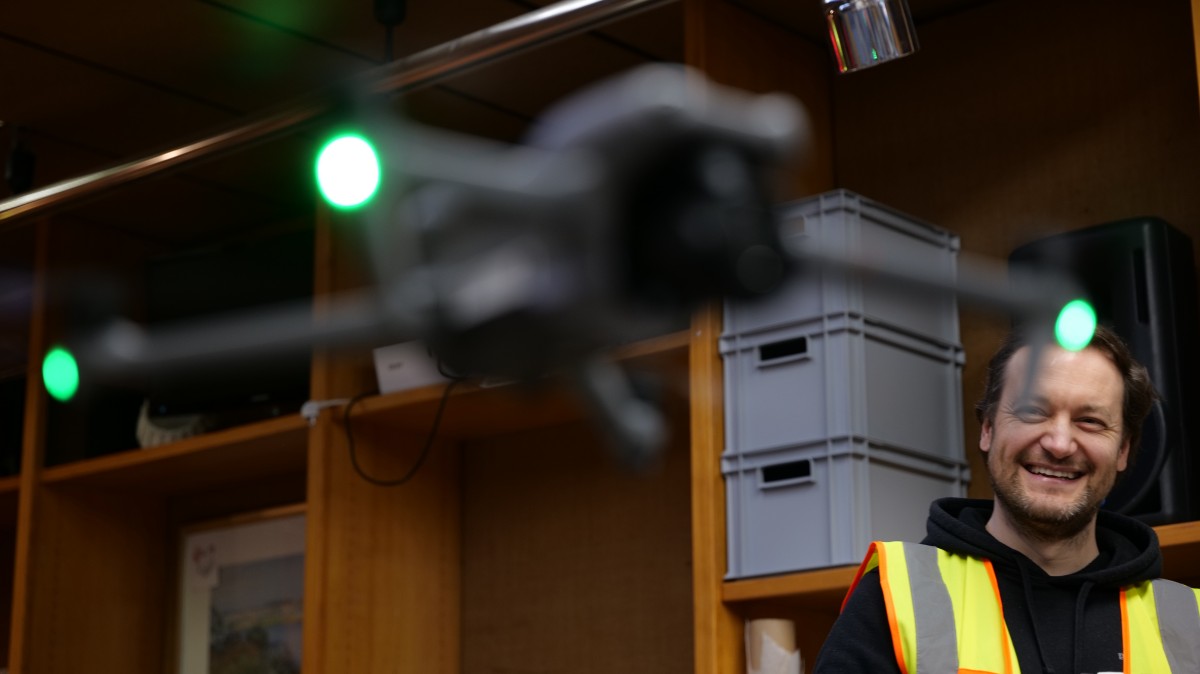
A very enthusiastic Matthias pilots the DJI Air 3 in the living space

So what do we do with the drone or what can you do with the drone with us? We will regularly go on photo tours with the drone, and if you are allowed to fly the drone (A1 driver’s license), then you are welcome to come along and join us. We are currently planning the first tours, e.g. the Bundesfestung around Ulm are a good place to start. As soon as we have more information, you will find it here or in our calendar.

At this point, of course, a big thank you to Wikimedia Deutschland and the German Foundation for Commitment and Volunteering, whose support makes such hardware and projects possible in the first place.

LokaliCon, the meetup of Wikipedia Community Spaces in Neu-Ulm

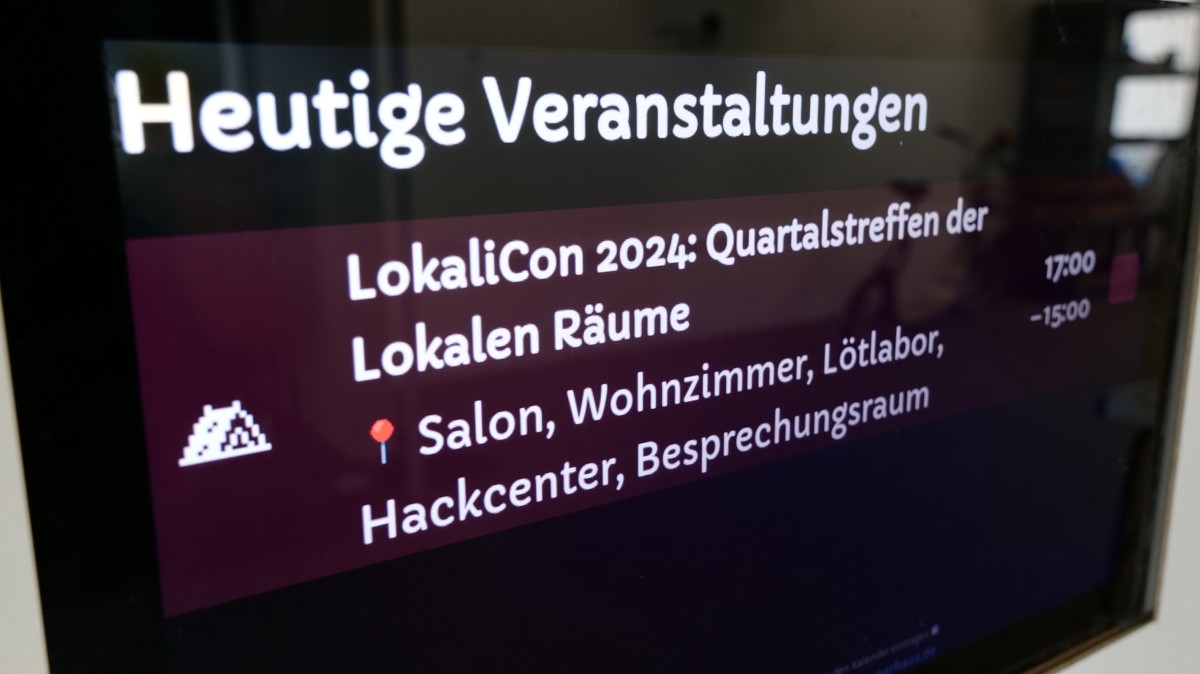
From March 22 to 24, more than 20 Wikipedia volunteers from Berlin, Fürth, Hanover, Munich and Neu-Ulm are meeting for a networking event at temporärhaus. They are all active in the Local Community Spaces spread across Germany, i.e. contact points in former stores within the city where they can work together with the respective urban community on Free Knowledge in Wikipedia and its sister projects.

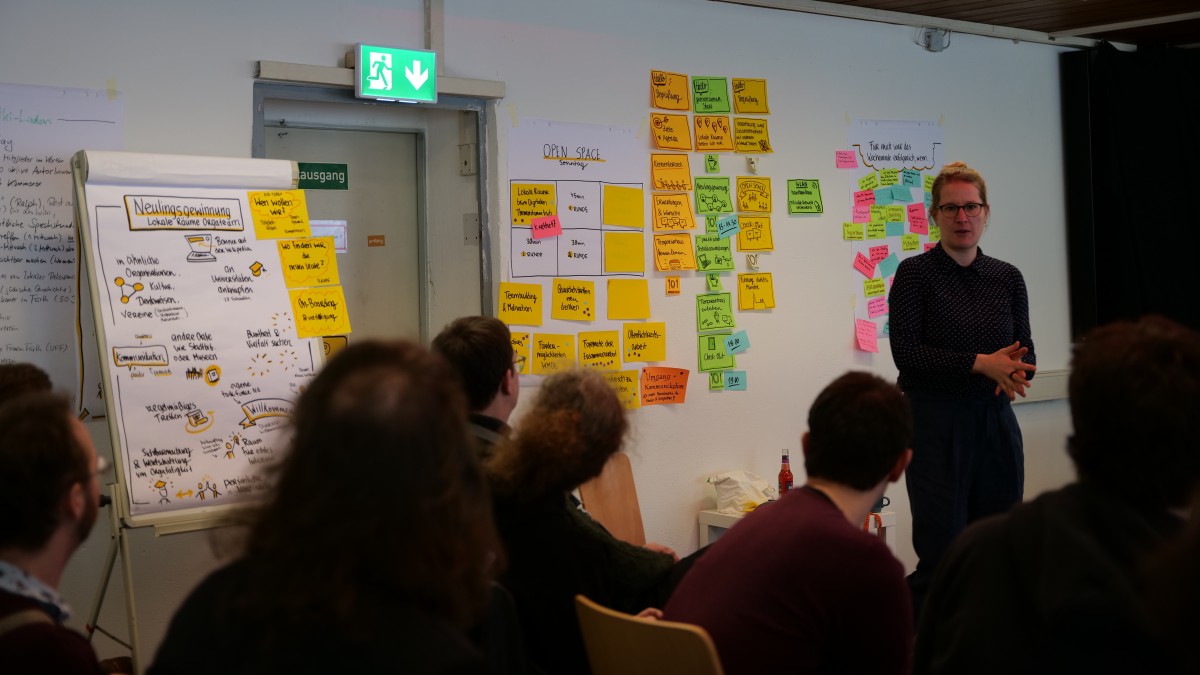
Zwischenmoderation beim Praxisaustausch, wie die einzelnen Räume die örtliche Öffentlichkeit erreichen

Whether working on Wikipedia articles on the city’s history, for drone photography or photo documentation of current events in the region as well as exciting old technology: All of this works much better and is more fun when you do it together. That’s why, since 2014, there are Local Community Spaces in now six large cities in Germany as networking locations for the local volunteering community. They are all financially supported by Wikimedia Deutschland.

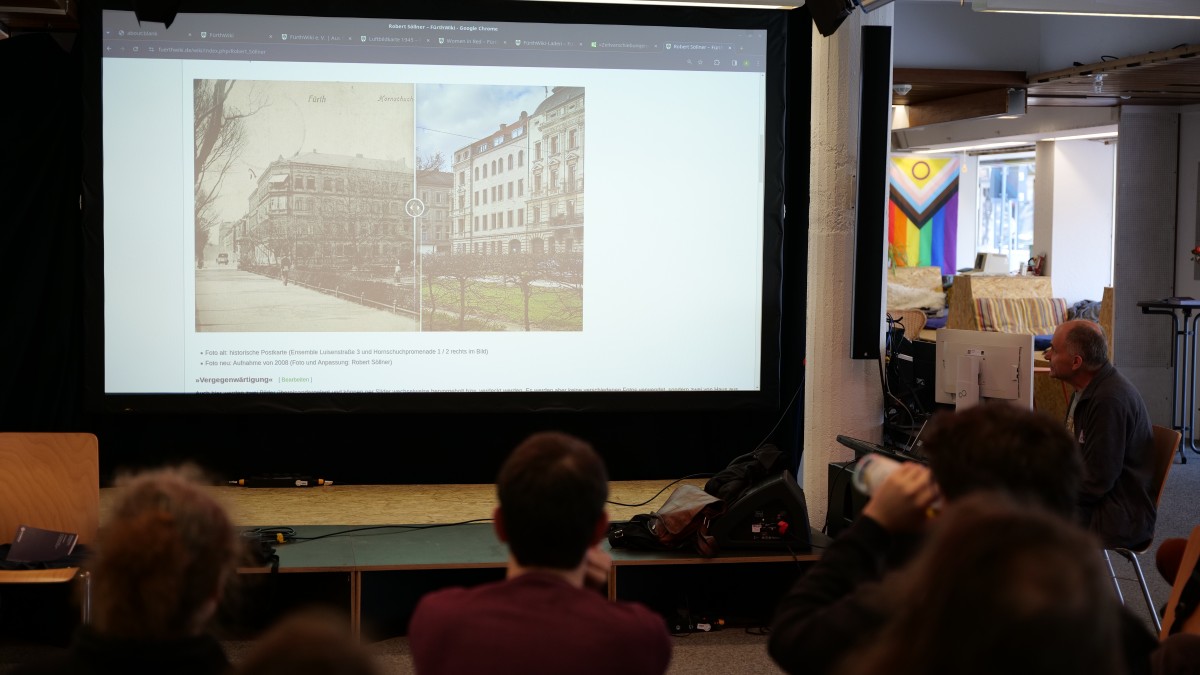
Demonstration der Zeitreise-Bildslider aus Fürth auf unserer Bühne

For the first time, activists from the various spaces meet on this weekend for their own exchange mini-conference. And we are very pleased to be able to host a Wikimedia event again. From recruiting new talent to public relations work to very practical examples such as the impressive Time Shift Images from Fürth, which compare historical and current images of the same place and make them tangible.

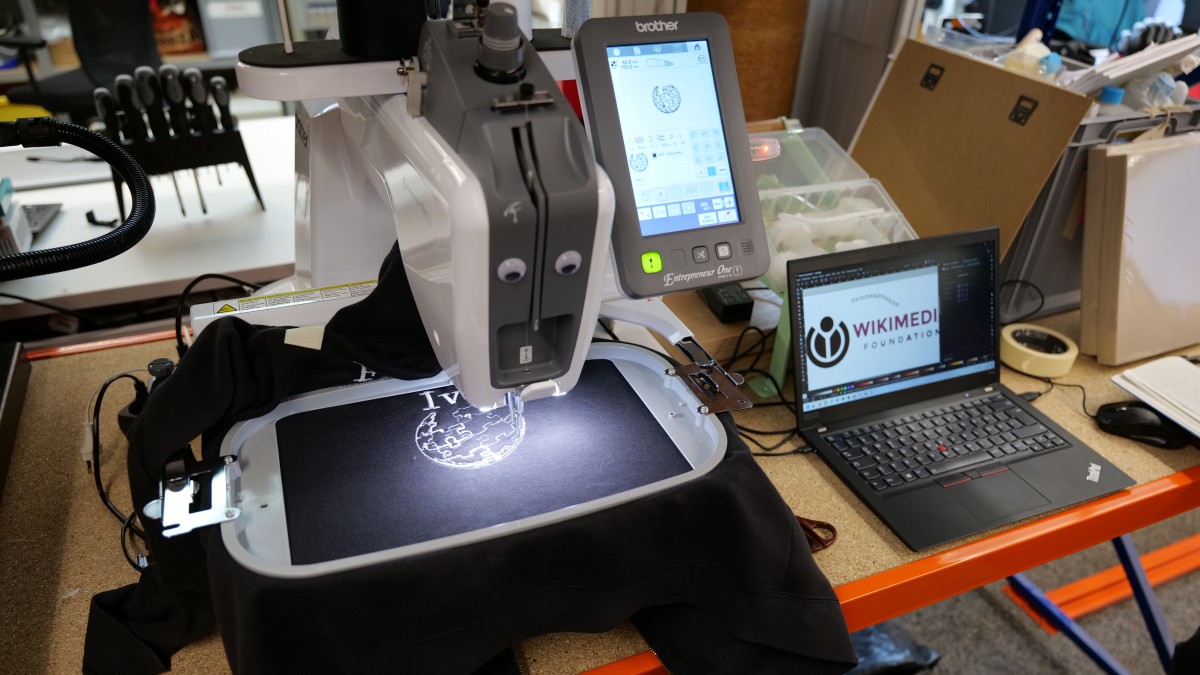
Auf der Stickmaschine wird ein Hoodie mit dem Wikipedia-Ball bestickt

We have already been inspired by many beautiful examples that we would like to put into practice in the twin city. At this afternoon’s temporärhaus-erleben event, we were hopefully able to return the favor, for example with items of clothing personally embellished on the embroidery machine, which now feature a Wikipedia ball and other things. Tomorrow we will continue – and we hope that the goals we set ourselves beforehand will have been fully achieved :)

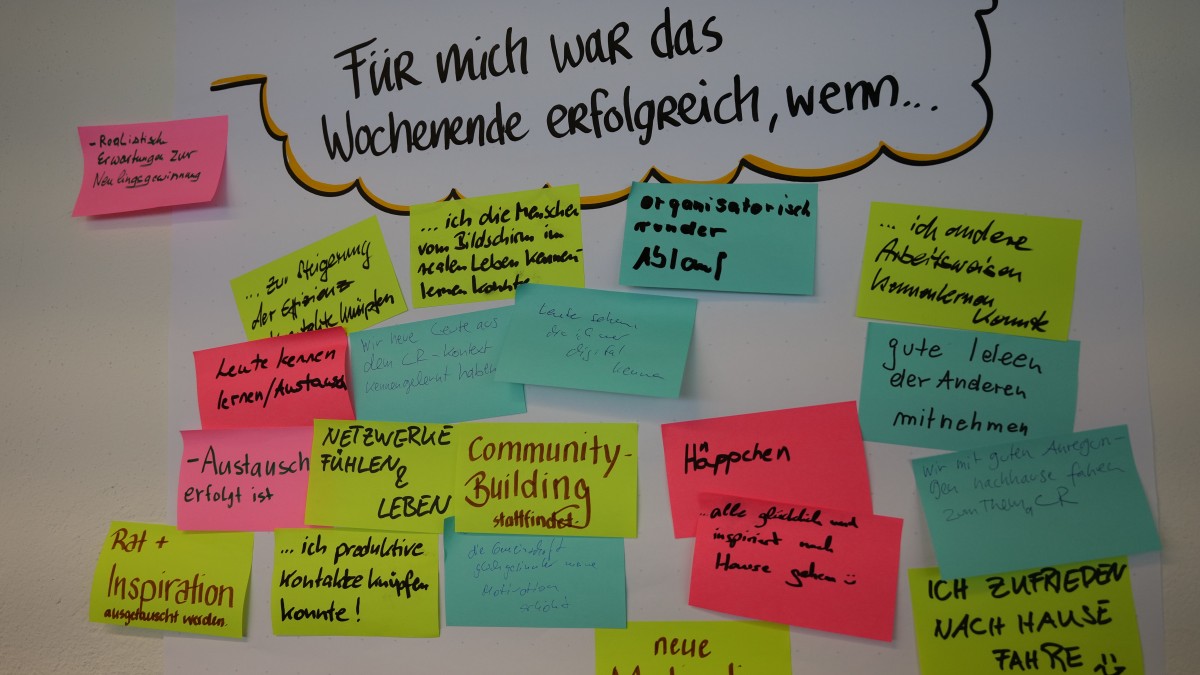
Die Post-it-Wand mit einem Teil der vorab festgehaltenen Wunschziele für das Wochenende

You can find photos of the workshop weekend in this Wikimedia Commons category!

End of Winter countdown – Monthly Review February 2024

Although February is the shortest month of the year, we still managed to fit in 16 of our own public appointments in the 29 days – plus an external visit to Backnang, an F.U.C.K. networking workshop in our premises and, of course, lots of internal work assignments.

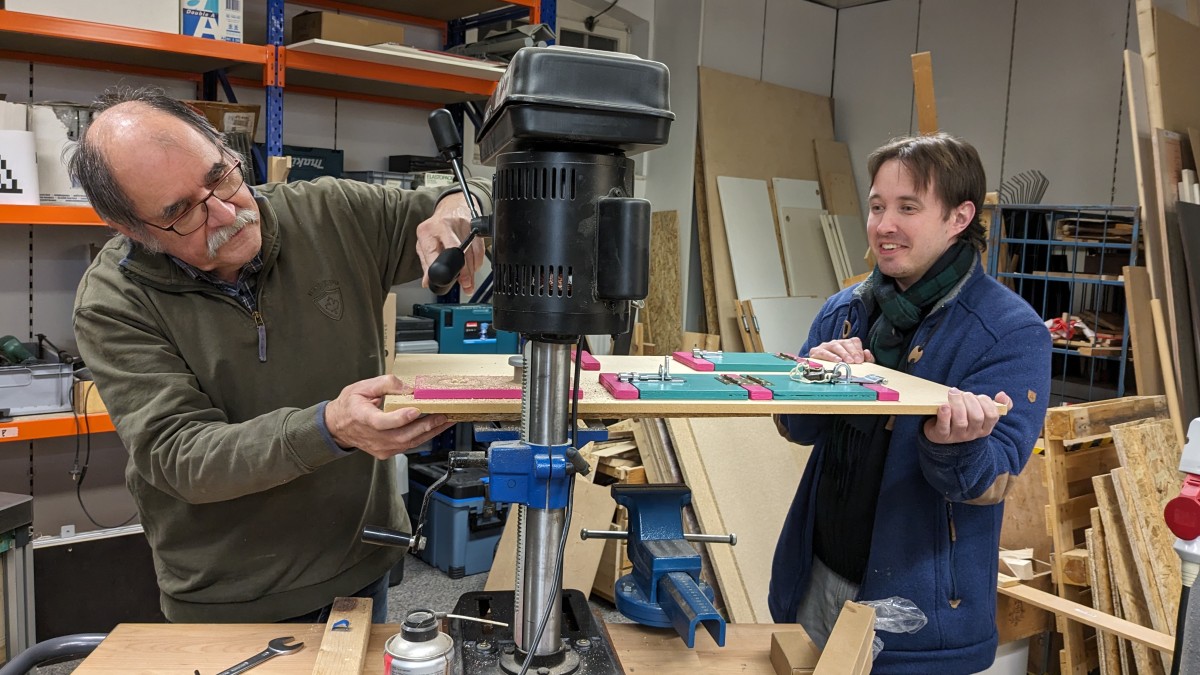
Photo from the workshop: Seppi and bastelbot drilling things with the drill press

The Maker Mondays continue to be very popular: around 30 and 40 people respectively came to both events and we are delighted that we are able to help so many ideas to become reality every other week. On February 5, Maker Monday once again coincided with the Sewing Café, so we were able to welcome over 50 people to the house on this day. The group around The Things Network and LoRaWAN met twice. This group now also offers a general opening time for anyone who would like to get involved with our excellent electronics laboratory equipment outside of IoT technology.

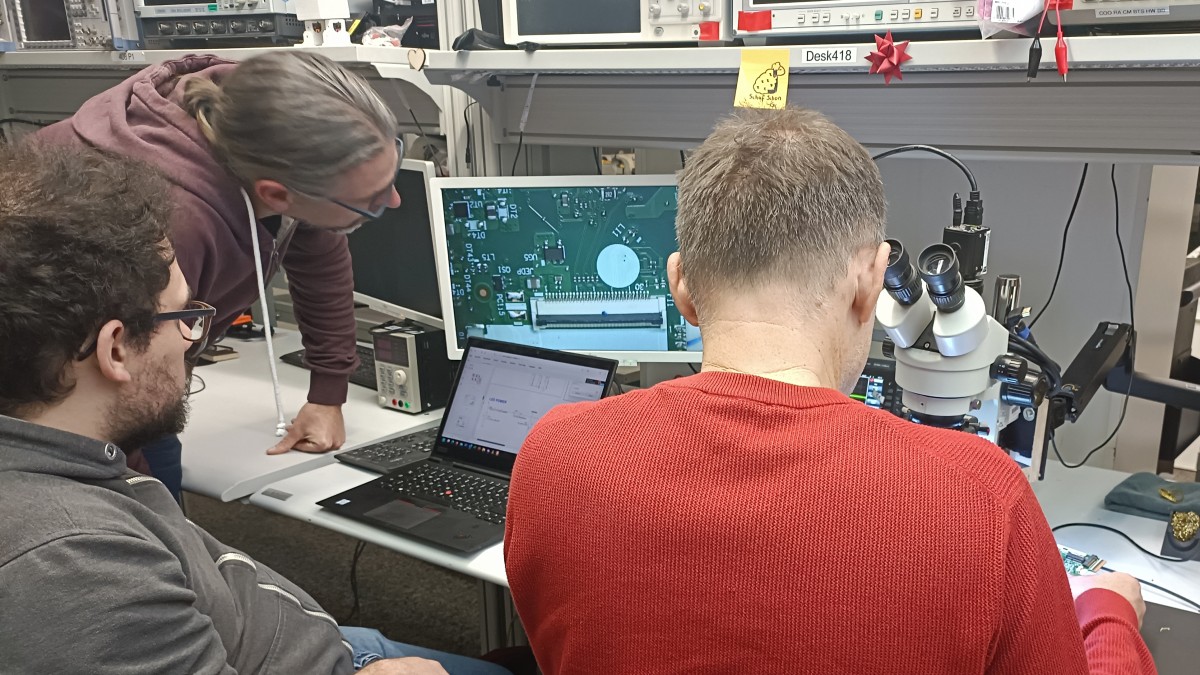
In the electronics laboratory, three people are inspecting a circuit board that is under the stereo microscope on the right. The video image of the circuit board under the microscope can be seen on a screen in the middle.

With the RAD-ikal technisch group, we have a new monthly offer in cooperation with the ADFC since February. The focus here is on innovation and experiments relating to bicycles and the mobility transition – for example the OpenBikeSensors, which can be used to measure and evaluate the overtaking distance of passing cars while riding a bicycle.

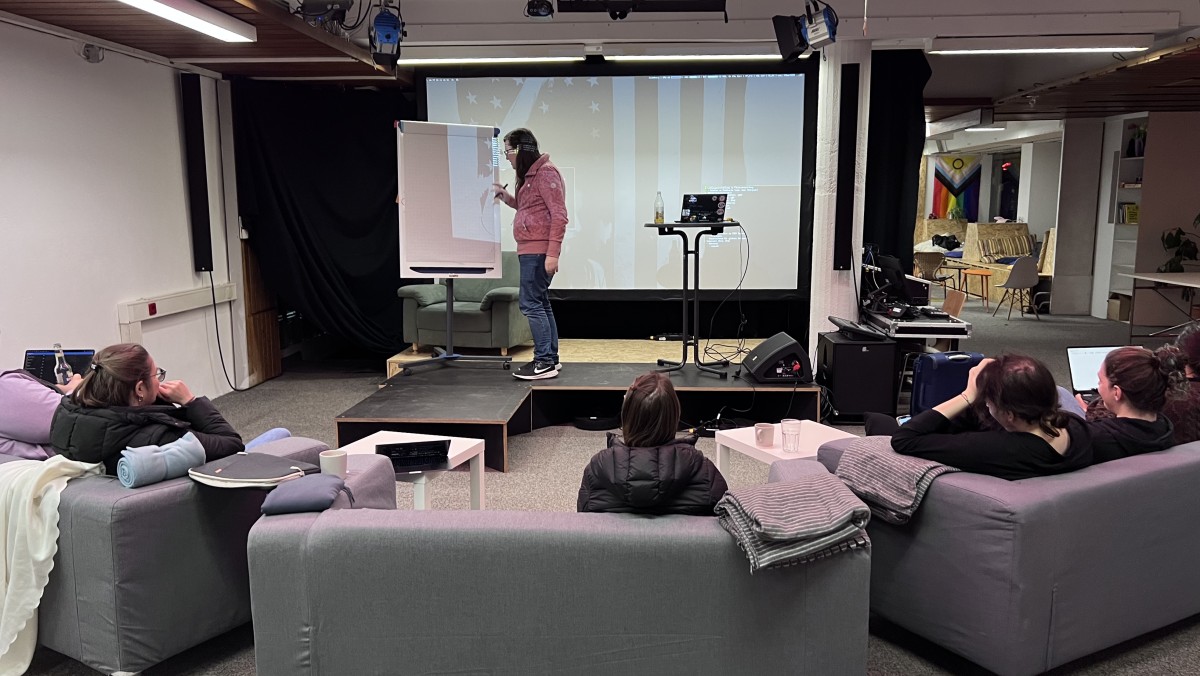
Photo from the F.U.C.K. networking meeting: People sit on sofas arranged in a semicircle while a person on stage explains something on the flipchart.

As usual, the weekly Live Let’s Plays focused on computer game culture, while the three Capture the Flag meetings dealt with a playful approach to IT security. In addition to the regional networking workshop organized by FLINTA* and Computerkram, there were also two F.U.C.K. evenings in February, including a soldering workshop where solar lights were built. Last but not least, as in every month, the OpenStreetMap regulars’ table met in our rooms.

Soldering workshop: Two participants bend over their workpieces with soldering irons in their hands

Since the Chaos Communication Camp 2023 at the latest, networking with other self-governed spaces in the region has become much tighter. On February 3 and 4, a group of activists from Neu-Ulm visited Backnang for a networking meeting. Many thanks for the hospitality and the exchange!

In addition to all our events, there was of course an equally impressive collection of events organized by the House of Sustainability in the shared rooms. We would like to highlight the Method Lab Liberating Structures, which we also promoted via our calendar. Away from the public eye, there was also plenty to do behind the scenes:

Sophie leans on two wooden LED matrices

Not only are we still gradually putting the procurements from the DSEE funding into operation, we are still receiving exciting things :) In February, we received a fun addition from the team at Widerstand und Söhne, who left us two large LED matrices that they no longer had any use for. We don’t yet know exactly where to put them, but the first test showed that they look pretty!

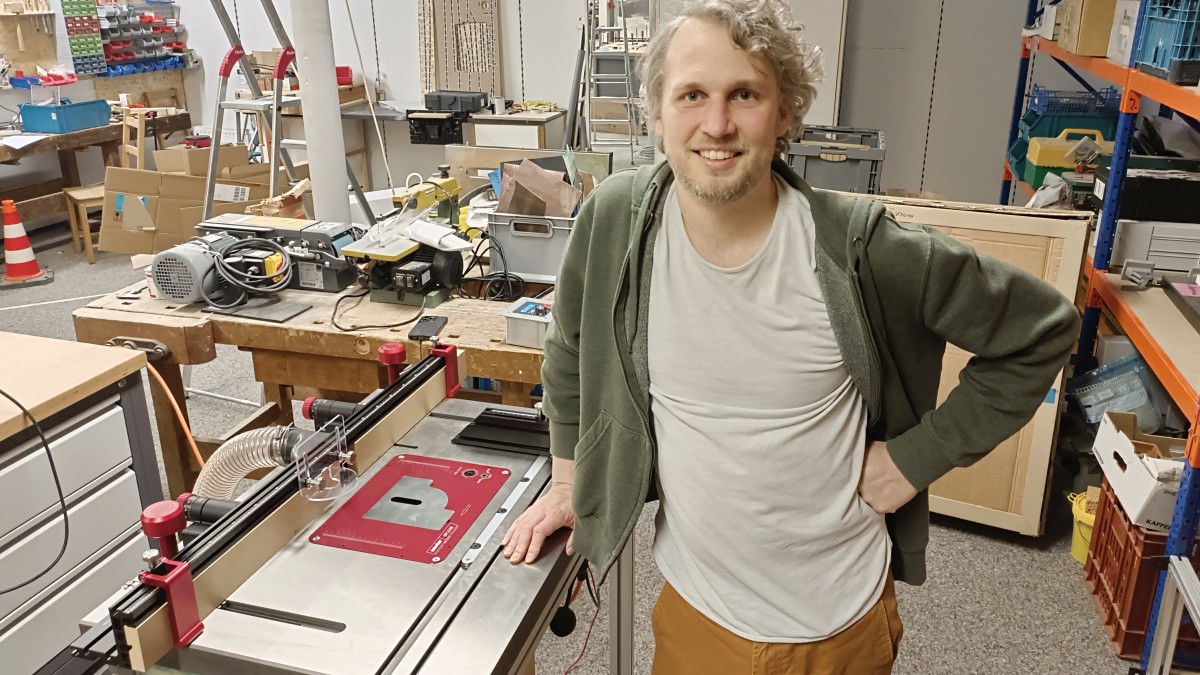
Henning looks very pleased at the camera. He rests his hand on the freshly assembled milling table in the wood workshop.

Also looking pretty is our new milling table, which Henning is visibly happy about in this picture. And we already know where we want to put it (the milling table, that is, not Henning). After Seppi had adapted and rebuilt the table, it now expands our skills in the wood workshop even further. This is another great new piece of hardware that we were able to get through the DSEE grant – but due to the many new acquisitions, the wood workshop will soon receive its own report. And something else changed in the workshop in February: The temporary dust curtain was replaced with a not-quite-so-temporary molleton curtain.

Our housemates from the House of Sustainability were also busy in front of and behind the scenes in February. As far as shared infrastructure is concerned, the kitchen has enjoyed a proper upgrade and is now better equipped than ever before. Last but not least, to coincide with the Weeks Against Racism in March, the HdN team replaced the “Better Images of AI” photo exhibition in the salon with photographs from the Photovoice project by young people from Germany and South Africa.

The final spurt through the last weeks of winter can begin!

Event notice: The Human Cost of AI

On Saturday, 16.03.2024, 16.00 a lecture will take place in cooperation with Freiraum / CCCUlm.

“The Human Cost of AI” to discuss how training data for machine learning and filtering out harmful/illegal materials from social media platforms have a great mental toll on the folks doing such work.

Mophat Okinyi is a recognised expert in the field of machine learning and artificial intelligence. As one of the many techworkers in Nairobi, he was instrumental in training the needed models and used to filter out illegal or harmful content during the development phase of ChatGPT.

The speaker Mohpat Okinyi

As a human rights activist, board member of the African Content Moderators Union and CEO of Techworker Community Africa, Mophat is committed to fair working conditions and the professional development of African techworkers. One of his main concerns is the preservation of human dignity in the development of AI.

The talk will be held in English and will also be streamed live. The link to the stream on Saturday here.

Better stitching with PR1X – our new embroidery machine

This post is part of a series in which we want to present some of our new and valuable material that we were able to procure due to a grant by Deutsche Stiftung für Engagement und Ehrenamt.

Back in the old place, when we were thinking about how best to describe ourselves, we came up with this phrase: “A hacking and making space with embroidery, knitting and sewing machines […].” Knitting and sewing machines have kept kind of happening to us over time, so we have built up a veritable machine park. Only the combined sewing and embroidery machine purchased at the end of 2016 from the municipal start-up funds has no longer been available to us since our forced moving out from Ulm. So it was all the more obvious for us to buy a new one.

Embroidery machines are a very wild business. There are sewing machines with an embroidery module – like the one we bought at Weinhof – and there are very professional machines with 10 or more needles, which we felt were intended for the mass production of embroidered textiles. It turned out from our practical experience that neither end of that spectrum really suited our needs. We were never really satisfied with the combined sewing and embroidery machine from Weinhof, because although it sews great, the embroidery mode always felt a bit like a compromise. With the experience we have gained, however, we have now been able to say more precisely what we want: A machine that is easy to use, but is still first and foremost a real embroidery machine, so that we can embroider as many different things as possible with it.

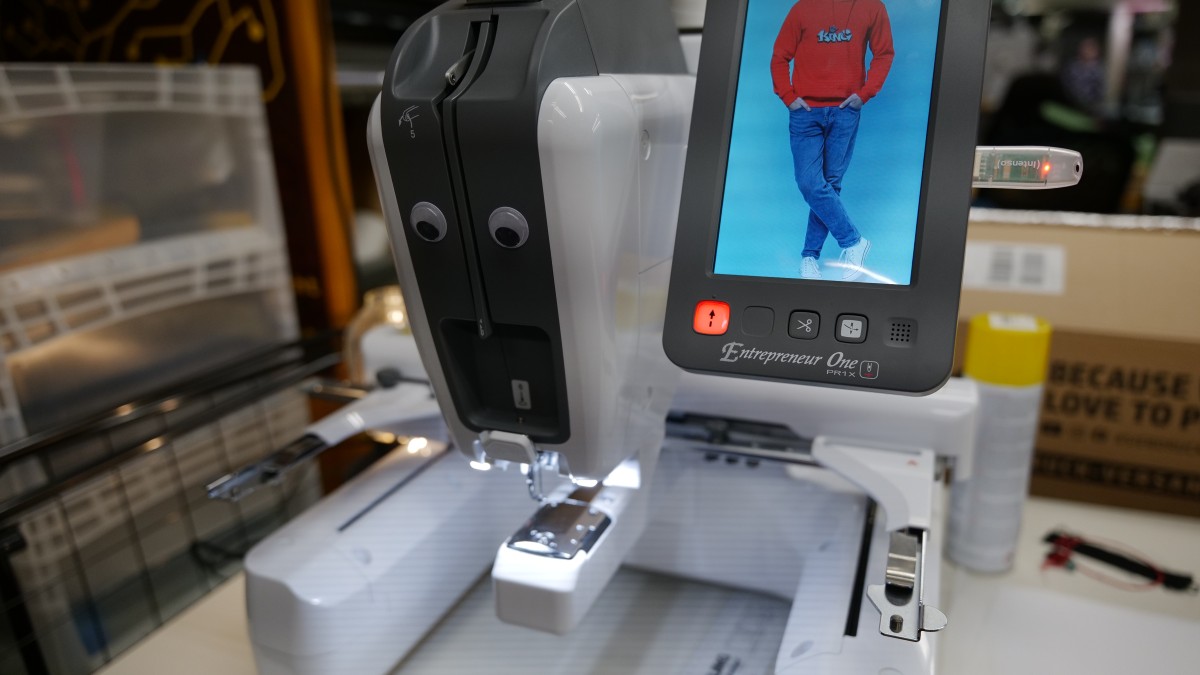
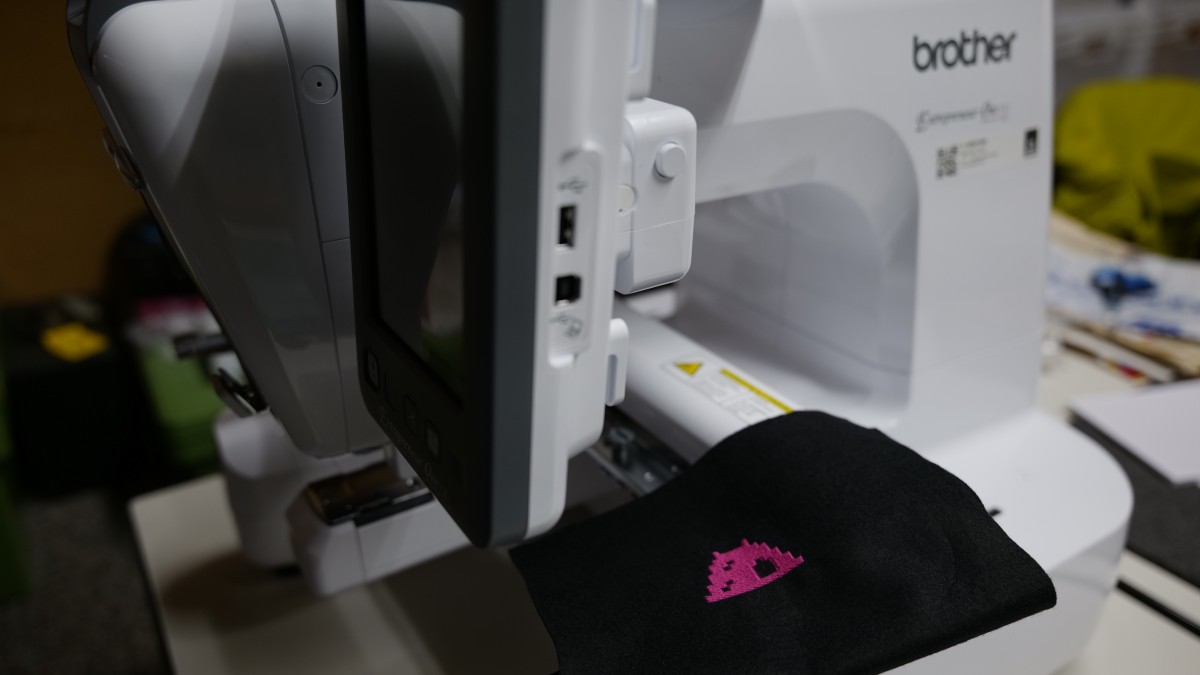
One of the first steps with the new machine

In the end, we chose the Brother PR1X, and so far it has met our expectations very well and is being used pretty regularly. As with the previous Husky, there are some included borders and fonts that can be selected directly on the machine and then embroidered – but to be honest, some of these designs seem a bit out of place nowadays. Of course, you can also read files from a USB stick and then embroider them. As always, this requires special software from the manufacturer, which costs extra money. In addition, such proprietary software contradicts our principle of Free Knowledge and Free Software and the associated social freedoms: Everyone should be able to use this machine and control it from their computer.

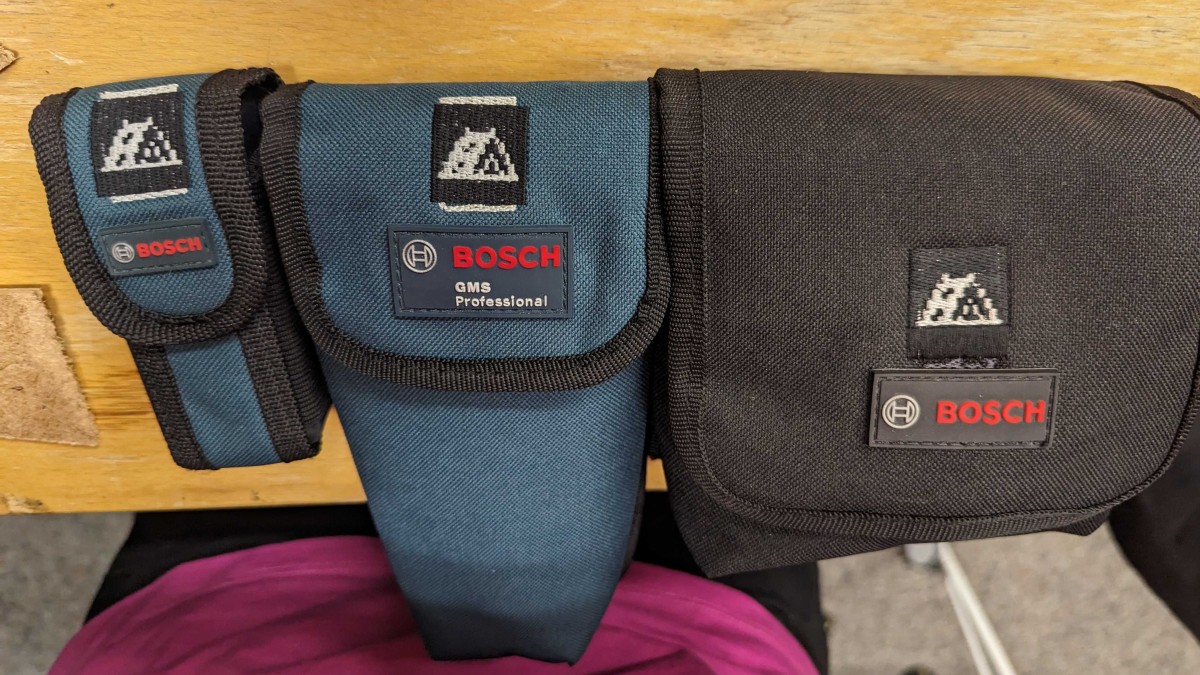
Fortunately, there is a dedicated embroidery machine community that has developed the Inkscape plugin Ink/Stitch. This allows you to draw or import vector graphics with the free graphics software Inkscape and then convert them into machine code for the appropriate embroidery machine. This means that anyone can design their own patterns, logos, pictures or other ideas and then embroider them. Of course, we have already tried it out and spread our Zelti on all kinds of fabrics.

Also suitable for the holsters of devices we own: The logo indicates that this is from our collection.

At this point, a big hurrah to Free Software and everyone who contributed to this plugin. A big drawback with the old embroidery machine was that the free alternatives were not so easy to use back then, so designing the things to be embroidered was a big hurdle. With Inkscape and Ink/Stitch, we can now use even an impressive machine like the PR1X just like that.

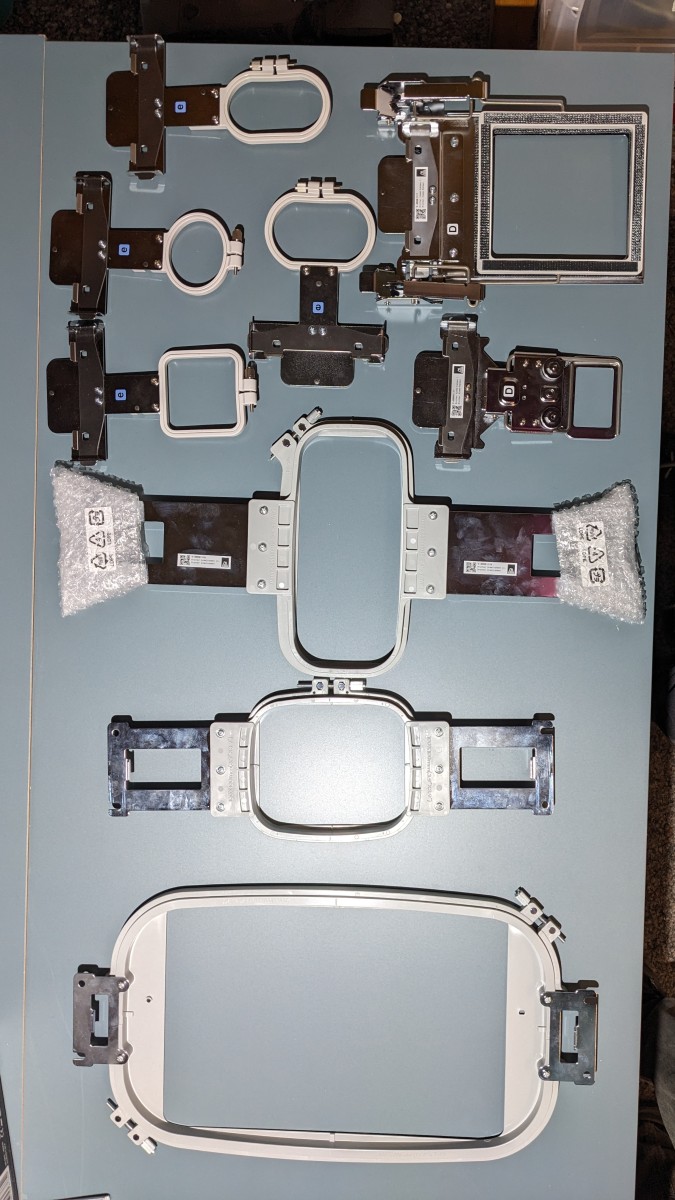
Let’s go back to the hardware aspect: The fabrics you want to embroider are clamped into a frame, which is then attached to the machine. With the old sewing and embroidery machine, this frame was always built into the design of the classic sewing machine. This made it difficult or even impossible to embroider hoodies, for example. With the new machine, we now have nine embroidery hoops in different sizes and a machine that has been designed for embroidery from the outset. This means that pieces of fabric of any size can now be embroidered.

From small patches to baseball caps and sweaters, we have a suitable embroidery hoop for almost every textile.

Anyone who wants to use the new embroidery machine is welcome to come along to one of our sewing cafés or Maker Mondays and have fun with it after an introduction!

Print more – our new Bambu 3D Printer

This post is part of a series in which we want to present some of our new and valuable material that we were able to procure due to a grant by Deutsche Stiftung für Engagement und Ehrenamt.

Our Maker Mondays are one of the most popular offers in our space. 3D printers, laser cutters and woodworking tools are not things that everyone simply has at home, and we are delighted to be able to meet the needs of people from Neu-Ulm and the surrounding area with our tools and equipment. We were already able to purchase an Ultimaker 5 with a large build chamber and two print heads from the last DSEE grant – but this machine was intended as a supplement to the two existing Ultimakers procured by the city. Since we resumed operations after our move to Neu-Ulm, this single 3D printer has been a bottleneck: we constantly have a high demand for 3D prints, but with just one printer, visitors were backing up and we had to send many designs to the print queue until the next Maker Monday.

Example Benchies from the 3D printer: How does this benchmark print look like with the respective layer height?

To alleviate this situation, we ordered another 3D printer thanks to funding from DSEE. We thought long and hard about which printer we wanted to purchase. What’s important in a makerspace is the best ratio of maintenance costs to printing time and actual successful prints. If you only print for yourself at home and have no problem optimizing and adapting your own printer, you can rarely go wrong with the standard kits on the market (usually copies of a Prusa model). However, the necessary fine-tuning of the kit and usually also the replacement of safety-critical components – especially with some inexpensive kits that do not come from Prusa itself – are time-consuming and not always suited to a rather public setting like ours. It was therefore important to us to have a reliable and fast printer that is easy to use for as many users as possible so that we don’t have to put too much effort into ongoing maintenance and troubleshooting – and at the same time have a good 3D printing experience.

Time lapse: A 3D print using multiple colors

When we initially moved into the original premises at Weinhof, we were already considering many of these aspects. Back then, we opted for printers from the Ultimaker series, which met many of our criteria (including printing via ethernet) given the state of the art at the time. In the meantime, however, the market has developed considerably. In the current range of available models, our choice therefore quickly fell on the Bambu X1 Carbon.

In addition to an impressive printing speed (which also clearly outshines our Ultimaker 5) and a relatively large print area, this printer offers a very special treat: the Automatic Material System AMS. AMS offers the possibility of printing up to four different colors or even different materials within one print.

Automatically exchanges different filaments in different colors: The AMS

Furthermore, the printer offers automatic detection of printing errors and the option of creating time-lapse videos with the built-in camera.

The printer has already proven itself at our Maker Mondays and has significantly reduced the bottleneck in 3D printing. The hand wheel shown in the time-lapse, for example, has become part of the 3D-printed printing press that was in use at the Chaos Communication Congress. We are excited to see what our users will create with these new possibilities.